
 Infiltrator
June 26, 2020 / 2 minute read
Septic Tank Installation Best Practices
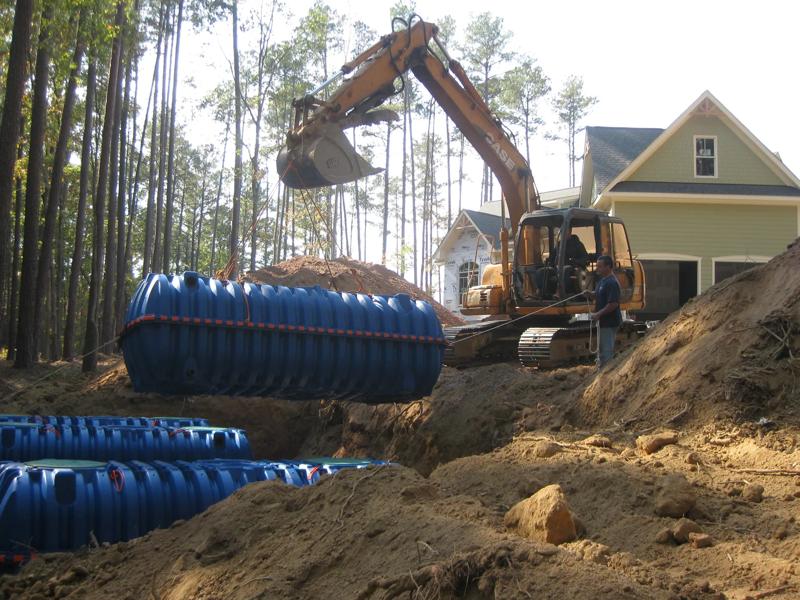
Proper excavation and bedding procedures are essential for a quality septic tank installation. This list outlines the best practices for installing a septic tank.
Excavation:
The site should be excavated properly and the base leveled prior to setting the tank. The length and width of the excavation should provide adequate space to allow for proper compaction and backfilling, and most importantly, provide a safe working environment for the crew. The heel of the bucket can be used to compact the excavation bottom prior to setting the tank.
Setting the Septic Tank:
The septic tank should be carefully lowered into the excavation. Check to ensure the tank is level in both directions and adjust the tank as needed.
Backfill and Compaction:
Backfilling of the tank should be done per the manufacturer’s installation instructions. If installing Infiltrator’s IM-Series tanks, backfilling can be done with native soil in lifts of 12 inches on all sides of the tank. Compact the soil with the heel of the bucket in 12” lifts and by walking-in the soil around the tank. Install inlet and outlet tees at the designated locations, also risers should be installed per plan and per manufacturer’s instructions.
Cover:
Once the septic tank is properly backfilled and compacted, place topsoil up to the final grade and provide positive drainage away from the septic tank. Additionally, the site should be seeded to minimize erosion and divert surface water.
For additional information about septic tank installation, please refer to our video library or Infiltrator IM-Series Septic Tank General Installation Instructions in our Online Resource Center.
All septic tanks must be installed according to state and/or local regulations, which supersede the manufacturer’s installation instructions. If unsure of the installation requirements for a specific site, contact the health department or permitting authority.