 Product
April 20, 2026 / 10 minute read
How Slotted Drains Improve Roadway Safety and Drainage Performance
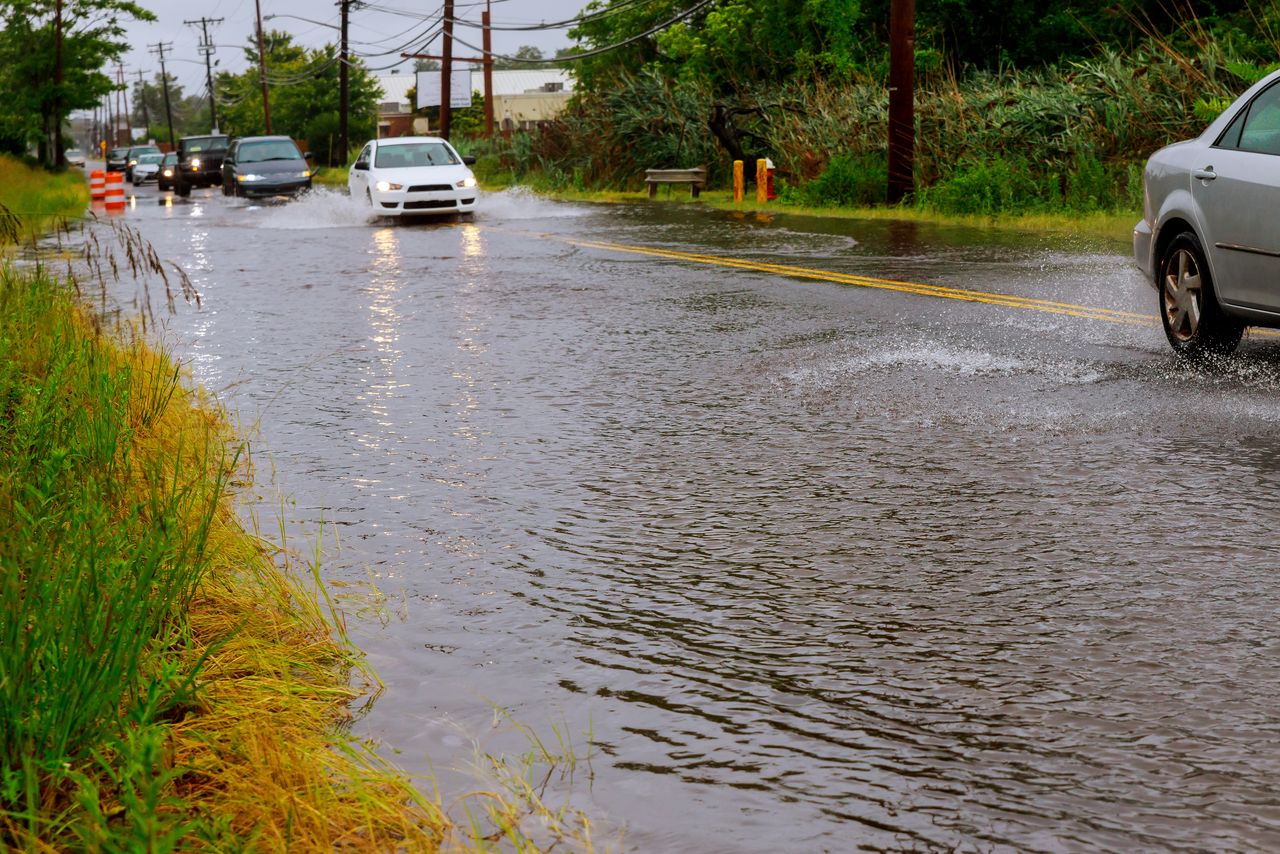
When rainfall exceeds the rate roadway drainage systems can intercept runoff, water begins to spread across the pavement and into the traveled way. As spread increases, it can affect vehicle control, increase hydroplaning risk and reduce roadway capacity. How well a roadway manages that runoff depends on both pavement geometry and the drainage system designed around it. Inlet type and placement play an important role in how quickly surface water is collected and how far it is allowed to spread. For roadway engineers, that makes inlet strategy an important tool for managing spread before surface water becomes a larger safety concern.
Poor Roadway Drainage Increases Safety Risks
The risk of poor drainage is more than slower operating speeds and reduced travel capacity. The more serious concern is what happens when water remains on the pavement long enough to reduce friction and disrupt tire-pavement contact. TxDOT states that hydroplaning can occur at 55 mph (90 km/h) with as little as 0.08 inches (2 mm) of water on the pavement1. This is not a marginal roadway condition either. The Federal Highway Administration (FHWA) estimates almost 10% of all accidents each year happen during rain or mist, representing roughly 600,000 crashes, over 200,000 injuries, and nearly 3,000 fatalities each year2.
Some areas are more exposed than others. In a national study of rainfall-induced hydroplaning, Kaustubh Anil Salvi, a postdoctoral researcher for Alabama Transportation Institute, and Dr. Mukesh Kumar, associate professor of civil, construction and environmental engineering, conclude that roughly one-quarter of roadway sections across the continental United States experienced modeled hydroplaning-risk events between 1980 and 2017. The study identified the southern United States as a primary hotspot, but the takeaway is broader: hydroplaning risk is highest when intense rainfall, wider roadway sections and high-speed travel converge. Road sections carrying higher traffic volumes deserve particular attention because more vehicles are at risk when these events occur3.
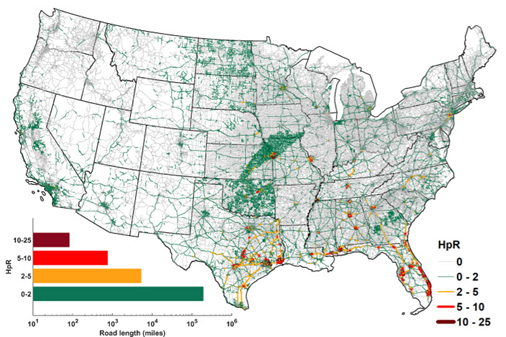
Hydroplaning risk (HpR) measured in frequency of high risk events per year3
Designing around real-world environments is becoming less forgiving with wide pavement sections, heavy traffic demands and increasingly intense rainfall events. There is less room for unmanaged and unaccounted for surface water as runoff moves farther across the pavement spread becomes harder to manage. Shallow ponding on roadways can carry a great consequence for drivers. That leaves roadway designers with little margin for error when it comes to capture placement, flow path length and early interception.
The practical issue is spread, or the width of water encroachment across the traveled way, which is one of the primary measures DOTs use to manage risk for various facility types and operating speeds. It's governed by several variables acting together including: storm intensity, cross slope, longitudinal slope, surface roughness, inlet spacing and whether a curb traps flow on the pavement. When those factors are unbalanced, water sits on the roadway too long, reaches farther into the vehicle path and elevates the risk of hydroplaning, splash and steering instability. Engineers cannot control rainfall, tire condition or driver behavior, but they can dictate how quickly water is intercepted and where it is allowed to spread on the roadway.
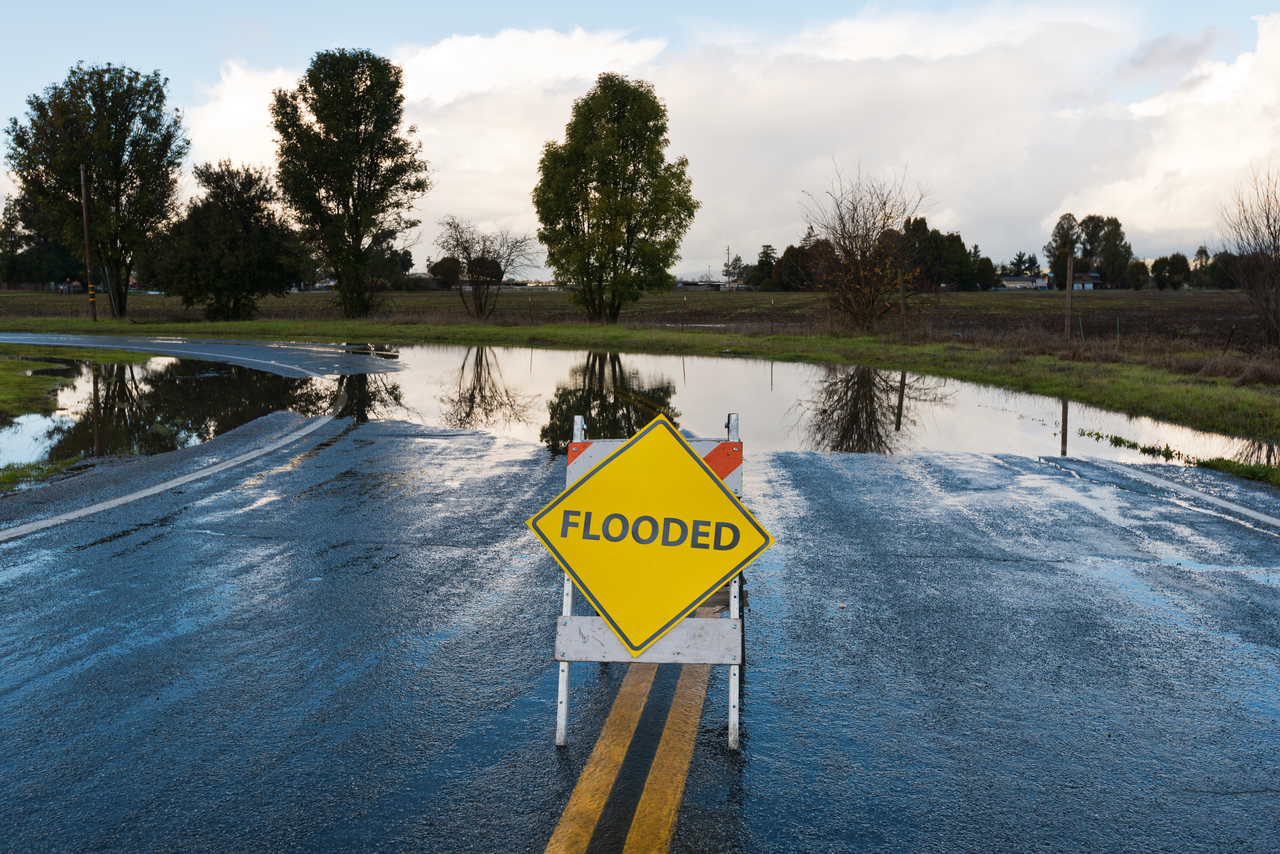
Practical Takeaway: Treat spread as a roadway safety design check, not just a hydraulic output. The goal: limit how far water encroaches into traveled ways under selected design storm and roadway conditions.
Slot Drain as a Solution to Stormwater Roadway Spread
Slotted drains help limit water spread by intercepting sheet flow runoff continuously along the pavement edge, reducing encroachment into the traveled way and improving surface drainage performance. Hydraulically, they behave similarly to curb openings because runoff enters through side-entry weir behavior, driven primarily by the roadway cross slope. The Federal Highway Administration (FHWA) recognizes slotted inlets within its roadway drainage guidance alongside grate, curb-opening and combination inlets.
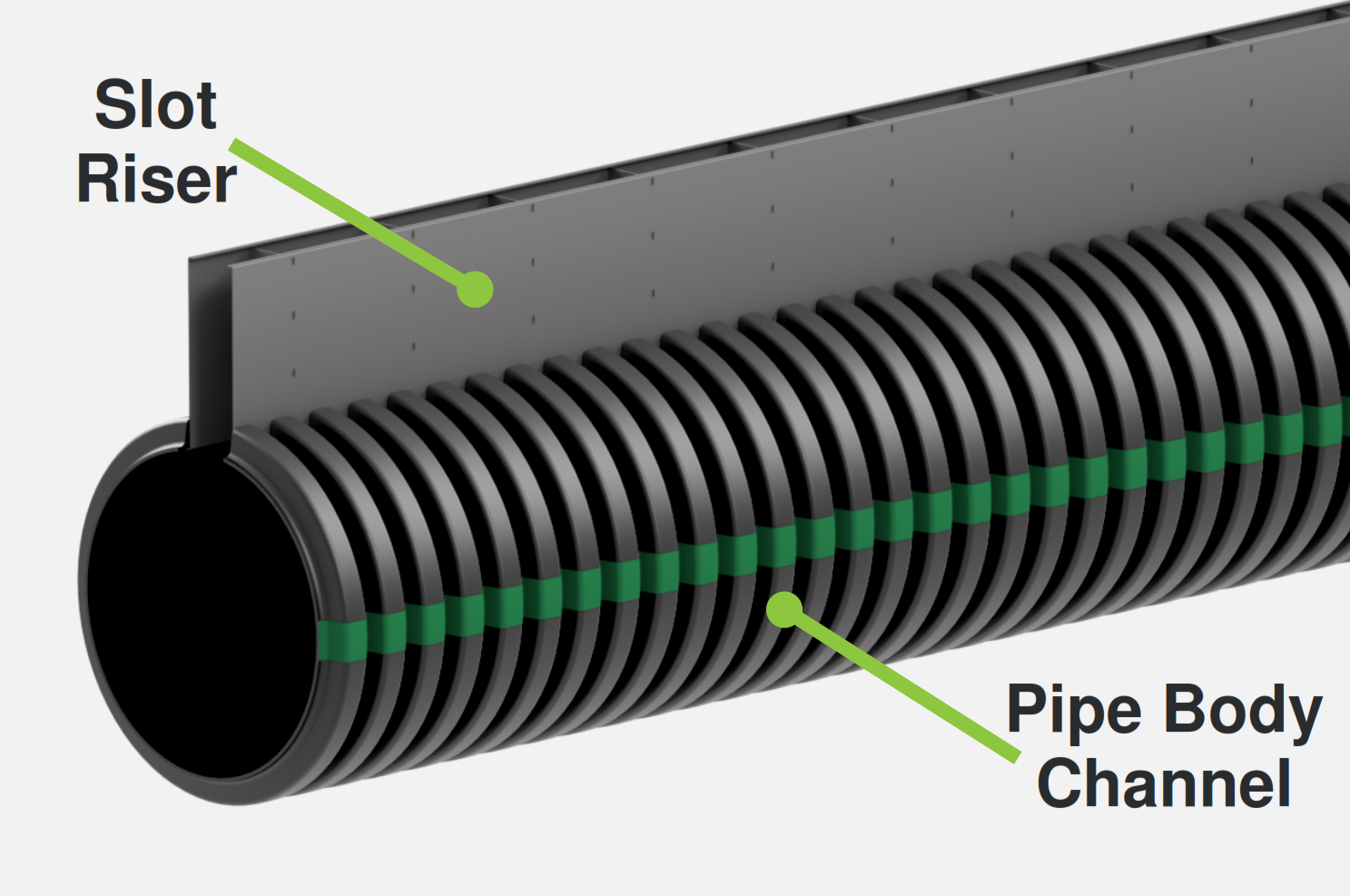
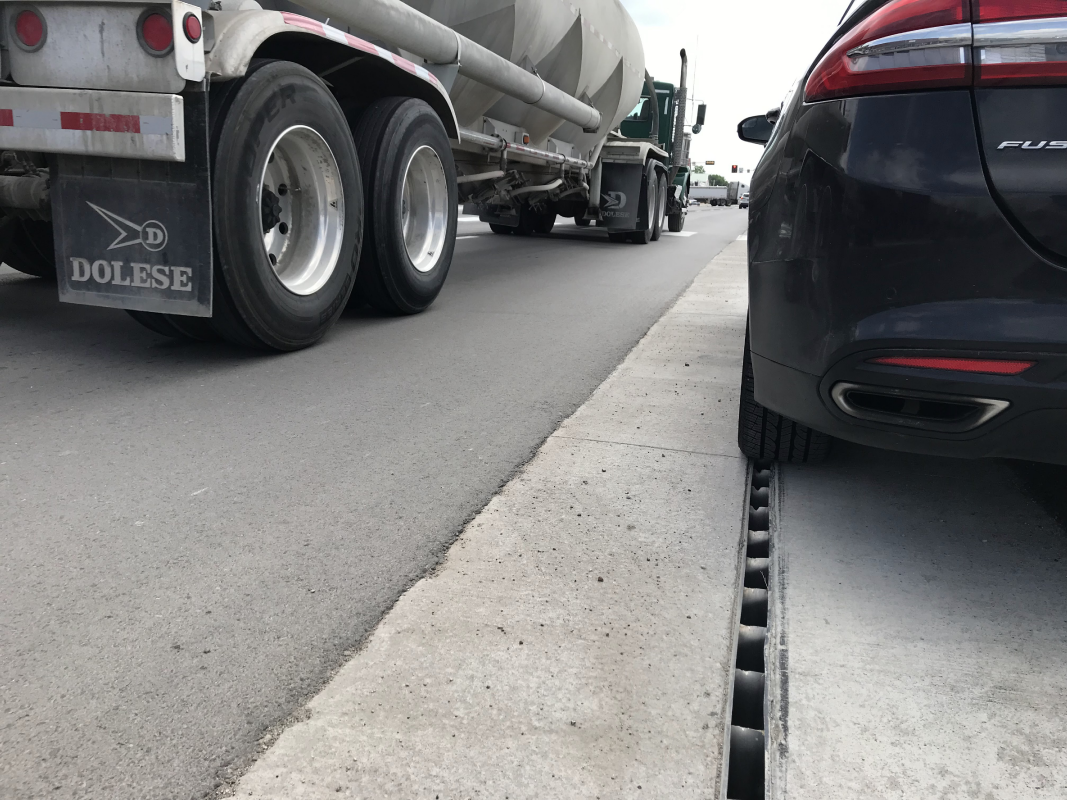
A key differentiator of pipe-based slot drains is their ability to combine continuous sheet flow interception with the hydraulic capacity of a large-diameter conveyance pipe. By intercepting runoff before it travels farther across the pavement, slot drains help reduce spread, limit encroachment into traffic lanes, and reduce exposure to standing water. This continuous collection also reduces reliance on localized depressions, helping engineers maintain a smoother pavement profile. The narrow surface opening limits exposed hardware in traffic areas while maintaining inlet efficiency over long collection runs.
Testing conducted by the FHWA suggests slotted drains can achieve full capture under low unit-flow conditions, with splash-over beginning around 0.04 cfs/ft (0.0037 m³/s/m). However, this should be treated as design guidance rather than a universal field guarantee. FHWA has developed equations to accurately model this behavior in Hydraulic Engineering Circular 22 (HEC-22), Urban Drainage Design4. To assist engineers, ADS has automated these equations in an Excel calculator to support faster and more consistent design checks.
An additional strength of pipe-based slot drains is the conveyance volume. Because slot drains use a large, round pipe body, they do not face the same channel-width limitations as traditional trench drain systems. As flow demands increase, trench drain systems often require wider channels or additional conveyance infrastructure, which can increase material cost and construction complexity. Slotted drains keep collection and conveyance tied together in one continuous system using familiar pipe hydraulics without fragmenting the drainage layout into separate inlet and downstream conveyance components.
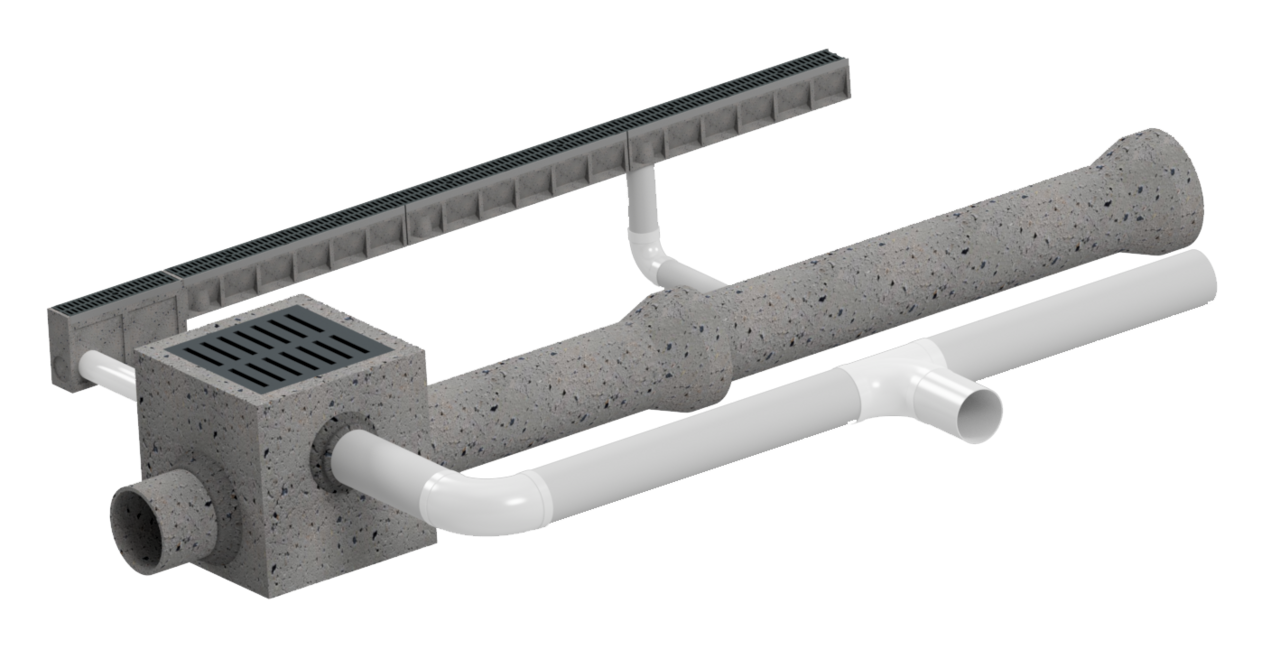
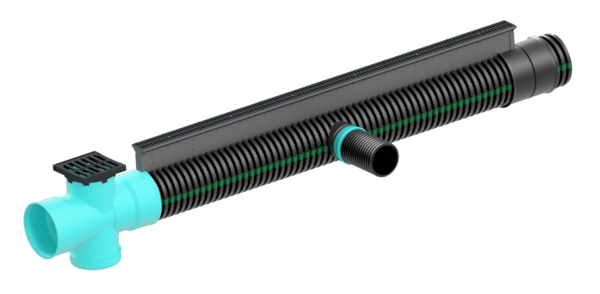
Typical Trench Drain vs. Duraslot Layout
Practical Takeaway: Use slot drain where the design problem calls for continuous surface interception and controlled conveyance over a longer run, especially where point collection alone does not reduce spread enough.
Diverting Sheet Flow With Continuous Interception
Slot drains are most effective in roadway applications where runoff must be intercepted continuously before it can concentrate or encroach into the traveled way. This often includes curbs, medians, barriers, wide pavement sections and phased construction projects where minimizing traffic disruption is important. In roadway applications, that usually means collecting sheet flow before it crosses onto the driving lane or before long pavement widths concentrate flow at the edge. The long narrow inlet provides wide-area capture without relying on large grate openings in or near the traveled way, making it especially useful along curbs, medians, barriers or as temporary drainage during phased construction where traffic disruption should be limited.
Slot drainage systems should align with the right application and designed with maintenance in mind. HEC-22 and some DOTs emphasize that these systems are susceptible to clogging over time, which makes them less attractive in sag conditions or locations where heavy sediment and debris loading are expected.4 Cleanouts spaced every 50 to 100 ft (15 to 30 m) provide access for inspection and jet-vac maintenance when required.
Where appropriate, inline or adjacent inlet structures can provide additional intake capacity if the slot becomes partially obstructed. Some DOTs recommend applying a clogging factor up to 50% when designing ensuring systems are tested against impaired conditions rather than ideal intake performance alone.
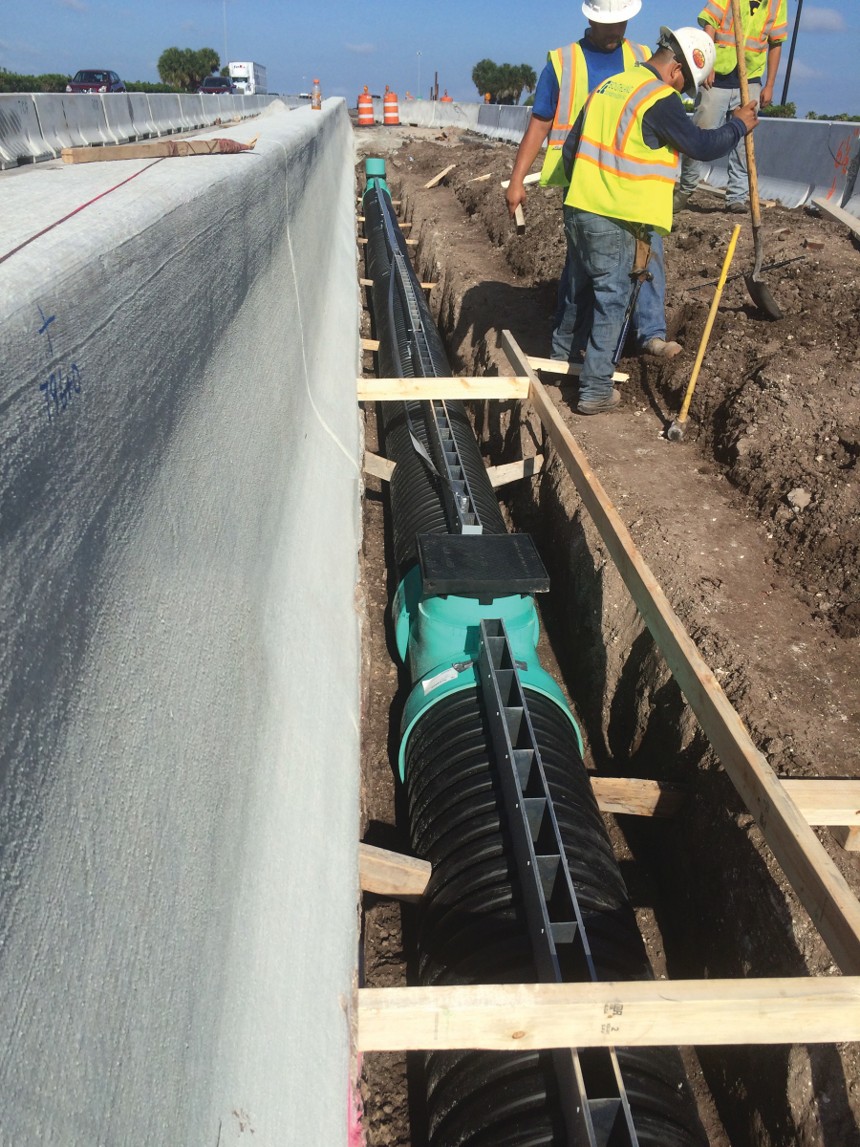
Practical Takeaway: Treat clogging and maintenance as design inputs, not post-installation issues. The hydraulic concept may be sound, but long-term performance still depends on how the system will be maintained.
Advantages to the ADS Slot Drain, Duraslot
Constructed from AASHTO-rated HDPE pipe and ASTM-rated 5052 aluminum slot risers, Duraslot is designed for long-term roadway performance. The corrosion- and abrasion-resistant material profile withstands harsh road salts, chemicals and PH levels present in challenging environmental conditions. Third-party research indicates HDPE drainage pipe can exceed 100 years of service life under expected conditions, while aluminum provides substantially longer service life than galvanized steel5,6. Together, these materials support lower lifecycle risk and reduced replacement frequency.
In roadway applications, drainage systems must withstand repeated traffic loading while maintaining hydraulic performance. Duraslot's lightweight, durable design resists deformation under heavy vehicular loads through its narrow slot opening as it transfers wheel loads into the surrounding concrete backfill rather than exposing the inlet to direct loading. ADS testing has verified compliance of AASHTO load requirements. The recessed slot profile protects the system from snowplows and any other maintenance equipment that damages surface drainage structures. When properly designed and installed, Duraslot can also be used in heavy-load applications like: airports, container yards and wharfs.
While inlet capacity is a primary strength of slot drain, conveyance volume is often the controlling part of the design. Duraslot supports high conveyance rates by using ADS' smooth-walled interior pipe with a Manning's coefficient of 0.012. The smooth-wall pipe interior minimizes hydraulic resistance, allowing engineers to achieve required flow capacity with smaller pipe diameters where site conditions permit. This can reduce excavation requirements and provide greater design flexibility in areas with limited cover, utility conflicts and constrained roadway geometry. Increased flow velocity supports self-cleaning performance by influencing sediment movement through the system.
Duraslot provides design flexibility while many slotted drain systems do not. It can be configured with different pipe sizes and slot riser heights to better align with site-specific hydraulic demands, grading constraints and available cover. Surface openings can likewise be tailored to the application. The standard 1.75-inch (45 mm) slot opening may be left open, maximizing runoff interception, or fitted with a grate offering 52% open area where pedestrian or bicycle traffic is expected. ADS also offers a 5-inch-wide grate option to increase inlet capacity and improve tolerance for surface debris. Together, these options give engineers flexibility to balance interception, conveyance, maintenance, and site requirements within a single drainage system.
Practical Takeaway: Duraslot combines long-run surface capture with the high conveyance capacity of a large-diameter pipe system, making it well suited for roadway applications where spread, hydraulic performance and site constraints are key considerations.
Why Engineers Use Slot Drain to Reduce Roadway Water Spread
Rain-related crashes remain a significant roadway safety concern, and one of the few variables engineers can directly influence is how surface water behaves before it enters the drainage system. Effective roadway drainage is ultimately about reducing exposure to standing water and managing spread before it creates a larger operational or safety problem.
The strength of slot drain is its ability to create a long capture run where point inlets would leave too much surface flow between collection points. In the right application, it offers engineers another practical tool for controlling runoff and reducing risk over the long term. For roadway applications where safety, traffic continuity, or wide-area drainage interception are priorities, slotted drain offers a practical and proven design approach. Like any engineered drainage solution, it performs best when matched to the site's hydraulic conditions, expected debris loading, and maintenance capabilities.
Duraslot builds on that approach by combining durable materials, heavy-duty loading capability, and high conveyance capacity within a single system. Various design options provide engineers with the flexibility to meet the most challenging site needs. That combination supports why ADS continues to be an industry leader in stormwater solutions for demanding transportation applications. For projects where roadway safety and surface water management are key design considerations, ADS can help evaluate whether Duraslot is the right fit and support the next step toward a practical drainage solution.
Interested in Learning More?
Visit the Duraslot Slotted Drain product page
Access the Duraslot Road & Highway Design Calculator
Read More From Urban Drainage Design
Source material:
- Texas Department of Transportation. Hydroplaning. In: Hydraulic Design Manual, Chapter 10: Storm Drains, Section 4: Pavement Drainage. Texas Department of Transportation. Accessed July 7, 2026. https://www.txdot.gov/manuals/des/hyd/chapter-10--storm-drains/section-4--pavement-drainage/hydroplaning.html
- Federal Highway Administration. How Do Weather Events Impact Roads? Road Weather Management Program. U.S. Department of Transportation. Accessed July 7, 2026. https://ops.fhwa.dot.gov/weather/roadimpact.htm.
- Salvi KA, Kumar M. Rainfall-induced hydroplaning risk over road infrastructure of the continental USA. PLoS One. 2022 Aug 31;17(8):e0272993. doi: 10.1371/journal.pone.0272993. PMID: 36044418; PMCID: PMC9432704. https://pubmed.ncbi.nlm.nih.gov/36044418/.
- Kilgore R, Atayee AT, Herrmann GR. Urban Drainage Design. 4th ed. Hydraulic Engineering Circular No. 22 (HEC-22). Publication No. FHWA-HIF-24-006. Federal Highway Administration, U.S. Department of Transportation; February 2024.
- Plastics Pipe Institute. Service Life: HDPE Corrugated Pipe. Drainage Division Resources. Plastics Pipe Institute. Accessed July 7, 2026. https://plasticpipe.org/Drainage/Drainage/Resources/Service-Life.aspx.
- Taylor CA, Marr J. A Research Plan and Report on Factors Affecting Culvert Pipe Service Life in Minnesota. Final Report. MN/RC 2012-27. St. Anthony Falls Laboratory, University of Minnesota; sponsored by Minnesota Department of Transportation Research Services. September 2012.
- Federal Highway Administration (FHWA). Urban Drainage Design Manual (HEC-22, 3rd Edition, Revised 2013). U.S. Department of Transportation.