
 Water
Water
May 13, 2026 / 4 minute read
New Crate Standard Advances Stormwater Design and Performance
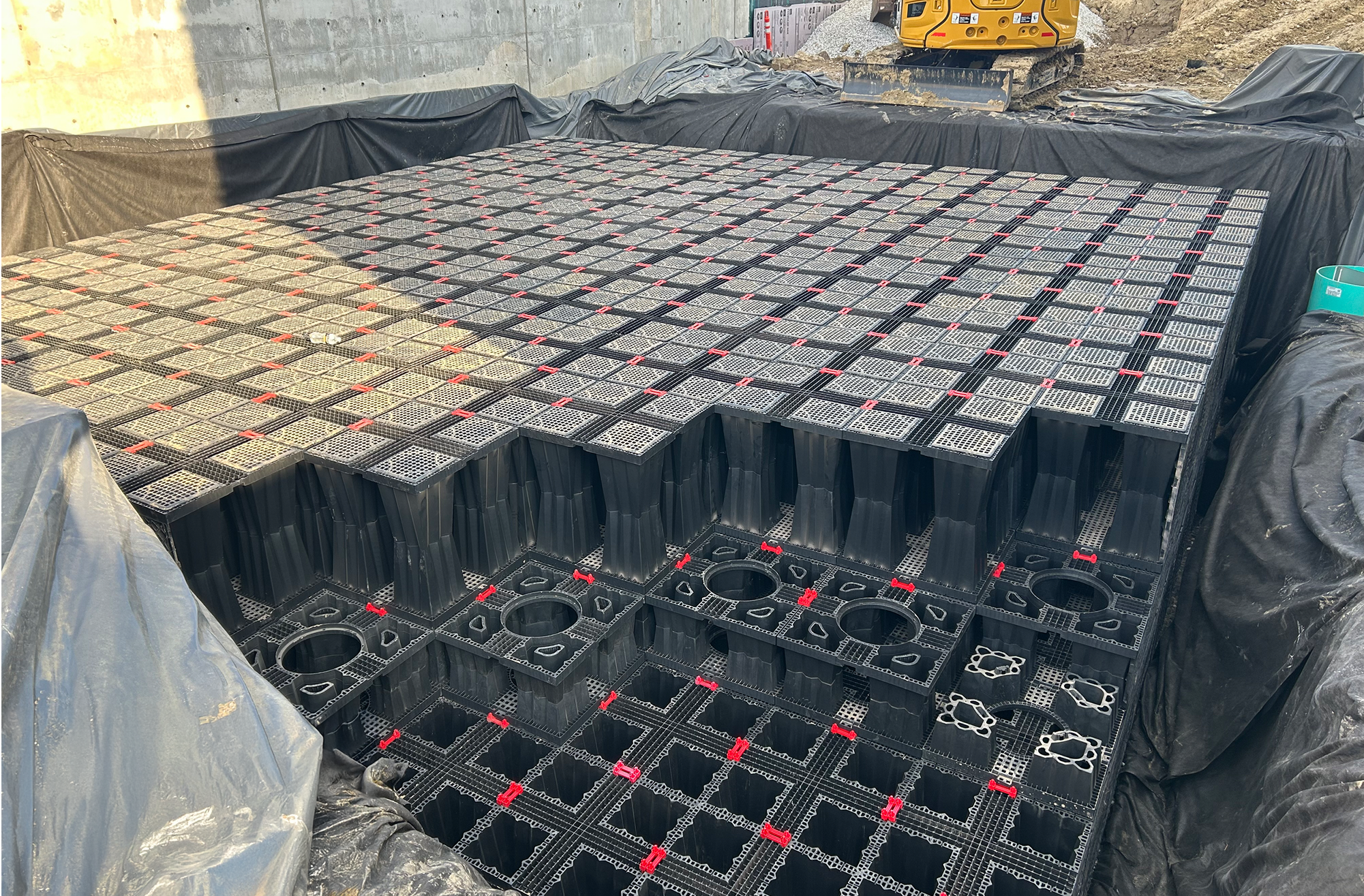
Increased rainfall events and intensity alongside spacing constraints demand compact, durable solutions that can keep up with higher stormwater volumes, faster runoff and the realities of dense urban environments. Underground detention and retention systems have become a critical part of modern infrastructure with modular stormwater crate systems rising to the occasion- providing high storage volume within compact footprints. (Plastic Pipe XXII, 2025)
As an industry leader, Advanced Drainage Systems (ADS), advances science and engineering pushing for higher standards in the underground retention/detention stormwater space.
Moving Beyond Traditional Stormwater Solutions
Stormwater crates fundamentally differ from pipe or chambers. They behave more like modular structural assemblies where loads are transferred through plates, columns and the interconnected units. Rather than relying on surrounding soil arching to redistribute load, one component has the potential to impact adjacent units, making system level performance critical.
Other systems put extensive stress on soil arching for load redistribution, while modular crates transfer stress throughout a series of connected plates and columns. The performance of individual components can directly impact adjacent units—highlighting the importance of system‑level evaluation.
Unlike systems that rely primarily on soil arching to redistribute loads, modular crate assemblies transfer stresses through interconnected plates and columns, meaning the performance of individual components can directly impact adjacent units—highlighting the importance of system‑level evaluation. (Plastic Pipe XXI, 2023)
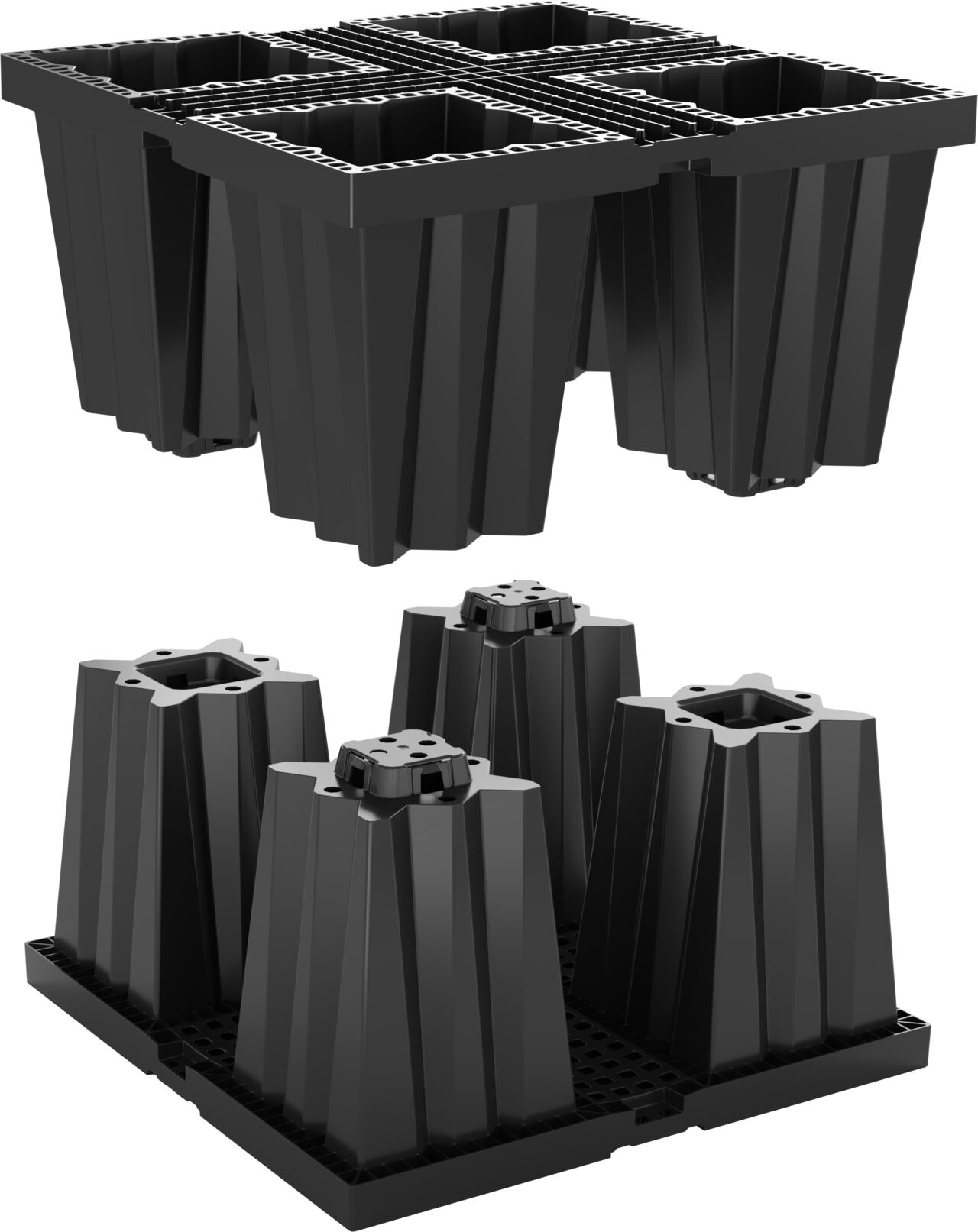
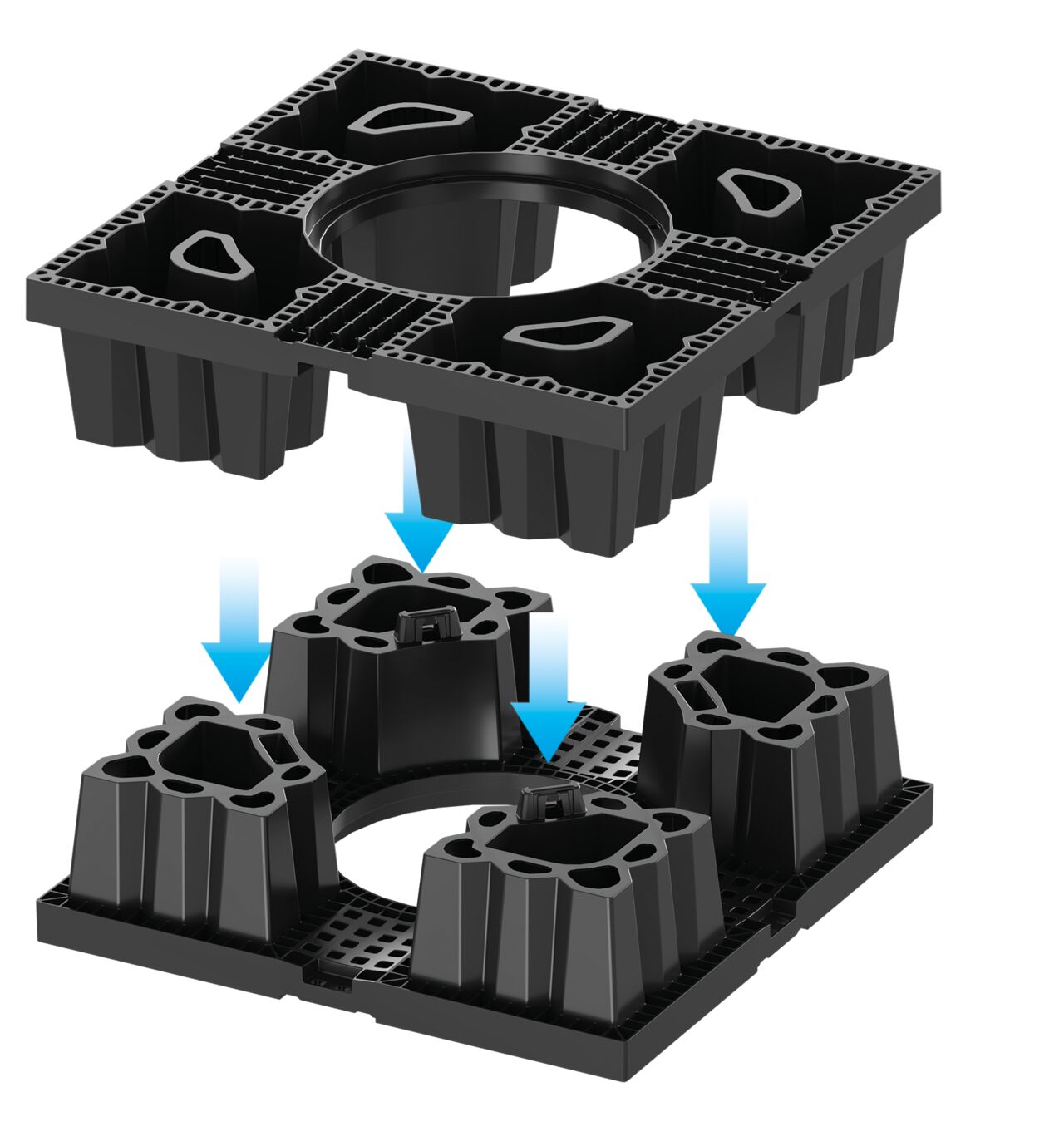
Early industry testing for modular crates relied on simple tests like placing rigid weights directly on panels or columns, but these tests didn’t measure up to the real-world circumstances and stormwater challenges of today’s demands. True field condition testing ensures structural integrity and resiliency of these systems meets real-life stressors. ADS engineers conduct in-depth tests for load distribution, bending stresses in plates and long-term creep behavior of thermoplastic materials under sustained loads with the understanding that industry-wide acceptance of crates would require more rigorous and realistic approach to testing and validation.
Developing a New Generation Test Method
ADS engineers collaborated with Ohio University to research and develop new structural testing methodology to better replicate in-ground performance, resulting in a custom-built load frame designed to simulate buried installation conditions rather than idealized laboratory assumptions.
John Kurdziel, Chief Engineer at ADS said, “Confidence in stormwater crate systems comes from testing that mirrors real installation conditions. By evaluating complete assemblies under realistic loads, we were able to establish performance criteria that engineers can rely on for long‑term infrastructure design.”
Key testing measurements:
- Soil load transfer simulation by placing a confinement chamber, containing granular materials, on top of the modular crate.
- Controlled deadload application testing conducted with advanced hydraulic systems and calibrated weights to replicate in-ground performance.
- Measurement of deflection, strain and load transfer through assembled crate systems, not just individual units.
- Explicit evaluation of flexural strains and tensile stresses in top and bottom plates, where long-term performance and creep are critical.
Through intensive testing, it was proven that a vast majority of applied loads were carried directly by the crate module itself, confirming realistic load paths and failure modes that conventional tests failed to capture. Upgraded testing methodology provides a true representation of real-world field behavior and long-term structural response for modular crate systems.
Testing methodologies were published and presented at the 2026 Plastic Pipes Conference (PPXXI), broadcasting the undeniable performance and durability of modular crate systems backed by in-depth stormwater crate evaluation.
From Testing & Research to Specification: ASTM F3754
Recognizable and enforceable standards create guidelines for the entire industry. That’s why Standard ASTM F3754 is so important: it sets the foundation for quality and function. Building on years of research, field experience and industry collaboration, ADS played a leading role in advancing ASTM F3754 Standard Specification for Polypropylene (PP) Crate Stormwater Storage Systems.
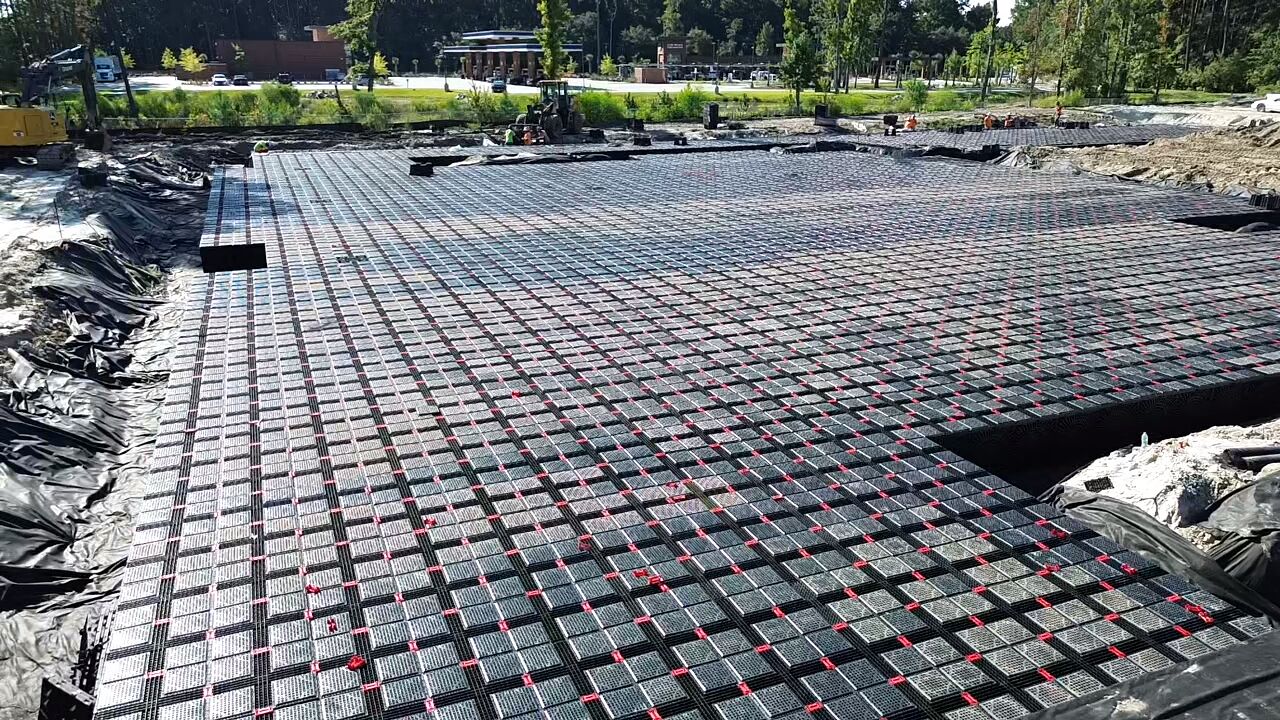
Published in 2026, ASTM F3754 represents a major milestone for stormwater management in North America through:
- Establishing material type, structural and installation requirements.
- Requiring full-scale performance testing reflecting realistic load conditions and long-term behavior.
- Structural design alignment with AASHTO LRFD principles, allowing standard application for municipal and transportation projects.
- Clear, consistent crate evaluation framework for engineers and specifying authorities.
ADS’ technical leadership and hands‑on involvement were instrumental in shaping the testing protocols, performance criteria and design philosophy embedded into the standard.
Raising the Bar for the Industry
ASTM F3754 does not simply validate a product category, it raises expectations for how stormwater crate systems are designed, tested and even installed. By coupling realistic structural testing with clear design guidance, the standard leads with an engineering-first approach improving confidence for project owners, designers and approving agencies.
This ‘engineering-first’ approach allows for:
- Advancements in new technologies and doing so responsibly.
- Supporting industry adoption through sound science.
- Ensure new and emerging stormwater solutions with reliable performance that lasts for decades of service.
As climate pressures and development constraints continue to shape infrastructure needs, ADS remains committed to leading not only in innovative engineered products, but in the standards and knowledge that support them.
ADS’ Dedication to the Future
ADS is committed to advancing stormwater solutions through sound engineering, rigorous testing and leadership in industry standards.