The Federal Emergency Management Agency (FEMA) needed to stabilize the situation and support rehabilitation of the community. This required a 1500-person workforce housing camp, which included 400 temporary housing units, laundromat, and food preparation and dining facilities.
Complications included accelerated deadlines and extreme site limitations, including shallow lava formations, which impeded construction and precluded subsurface dispersal. A General Order Permit was acquired to speed development.
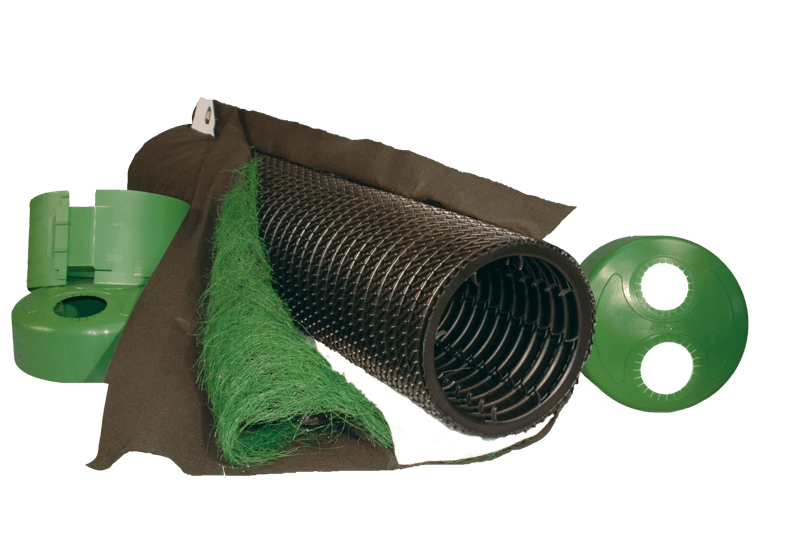
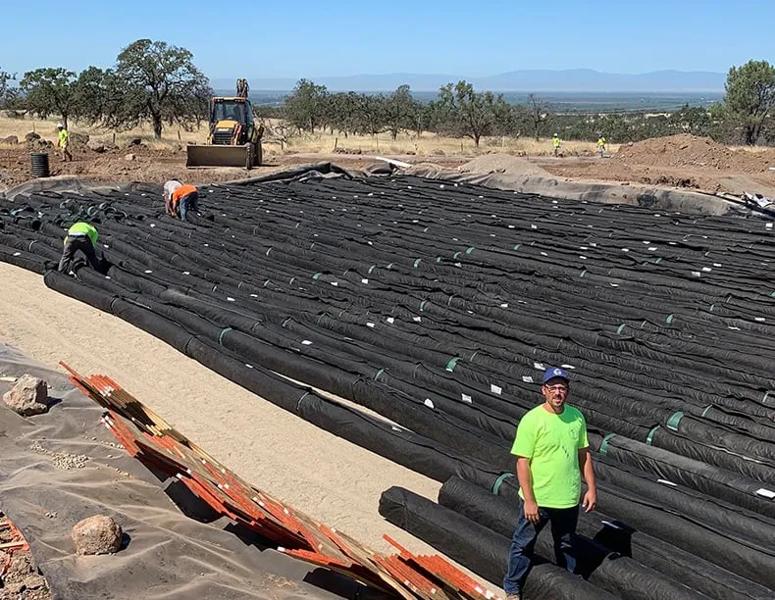
A 100,000 gallon-per-day (GPD) Advanced Enviro-Septic (AES) combined treatment and dispersal system was selected and specialized equipment was employed to excavate through solid lava-rock. The AES system receives gravity-flow influent to four, 40,000-gallon septic tanks configured in-series. The effluent is then segregated into four treatment paths to facilitate isolation during maintenance. The flow is split to four, lined, AES beds performing passive, secondary treatment. Each 25,000 GPD bed contains 8,400 feet of AES pipe surrounded by specified sand for a total 33,600 feet of AES pipe. Treated effluent is collected and gravity distributed to four, UV disinfection units, each followed by a pump tank. These pumps distribute purified effluent to two evapotranspiration ponds, which allow for possible reuse.
The low maintenance, high flow, AES system, including disinfection, allows for full occupancy of the FEMA work housing camp. This provides needed resources close to the devastated community.