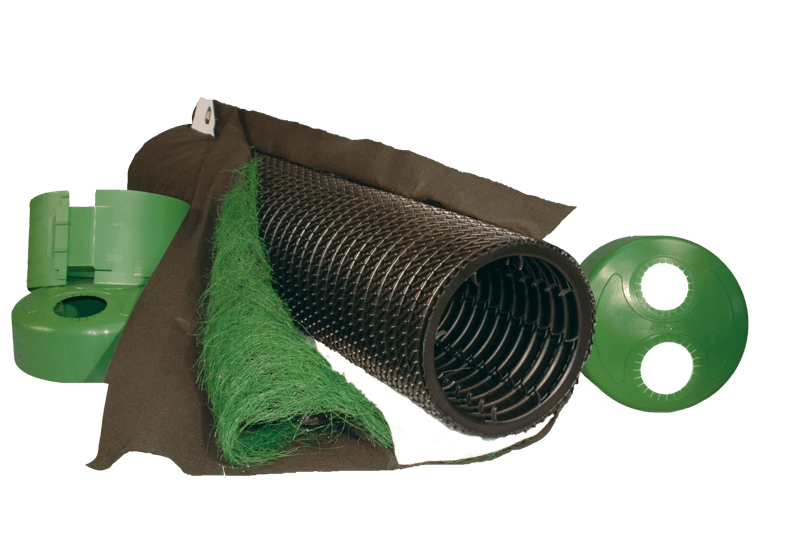
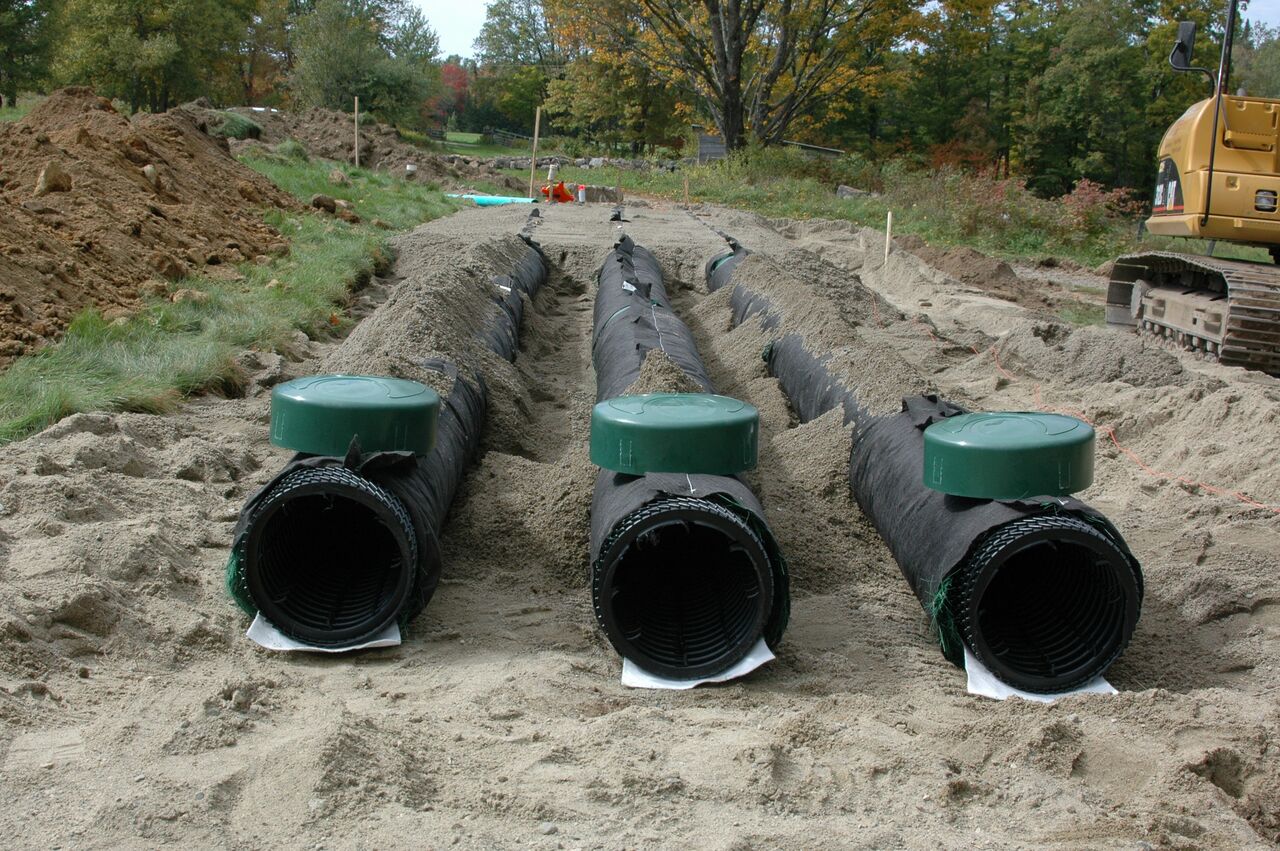
As a component of the Missouri Department of Health and Senior Services (DHSS) product approval process, a field performance assessment of 30 Advanced Enviro-Septic (AES) bed systems was initiated to demonstrate acceptable long-term hydraulic performance. AES systems were installed within three geographic areas of Missouri: Kansas City, St. Louis, and southwest Missouri/Branson. Installation sites included a diversity of soil textures and site slopes, along with daily wastewater flow volume. All systems had been operational for between three and eight years. One system was installed on a commercial property, with the remaining 29 serving single-family residences.
As a result of the DHSS product approval history, surveyed systems could range from 50 to 70 feet of AES per bedroom. The system sand footprint also varied with historical product approvals, with the required system area being 90% of what would be required for the conventional soil loading rate assigned to the site or smaller. Because current-day system sizing employs the maximum surveyed AES pipe length and lower-bound of the surveyed soil loading rates, the field performance assessment did not differentiate between sites based on either AES pipe length or soil loading rate.
The AES systems included in this study were divided into two “Study Groups,” based upon soil permeability. Study Group 1 included 20 systems designed with >0.25 gpd/sq soil loading rates. Study Group 2 included 10 systems designed with comparatively lower ≤0.25 gpd/sq soil loading rates. Soil loading rates varied within each study group to provide a representative range of soil textures.
The field evaluation was comprised of a non-intrusive, walkover visual site assessment, inspecting for surfacing effluent, shallow saturated soil, odors associated with effluent, and staining and stressed vegetation associated with past effluent breakout and ponding events. When possible, the occupant of the structure was interviewed in regard to the functionality of the AES system.
The third-party investigator of the AES system inspections found 29 of 30 systems operating properly. The lone system malfunction included a design that used a soil loading rate that was significantly greater than expected for areas soils, possibly under sizing the dispersal area. In response to the field survey, the Missouri DHSS issued a general use approval for a minimum 70 feet of AES per bedroom, and a required system bed area equal to 90% of what would be required for the conventional soil loading rate assigned to the site.