PRODUCTS USED
The Town of Geraldine, Alabama, has a population of approximately 1,100 people and needed a wastewater treatment system that was easy to operate and that could be expanded to accommodate future population growth. The selected wastewater treatment system needed the capability to treat the entire town’s domestic waste to regulatory limits that would allow for drip dispersal. The system also needed to handle flow fluctuations and retain consistent treatment to ensure the drip headworks would not clog and the dispersal field wouldn’t experience excess biomat development.
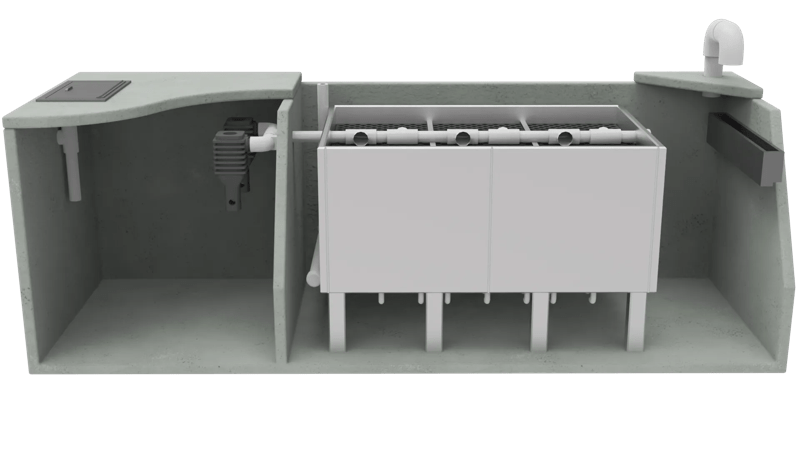
System designers selected ECOPOD Advanced Wastewater Treatment Units with a drip dispersal field for the 60,000 GPD system. The ECOPOD Series for advanced wastewater treatment is simple in design, easy to install, low maintenance, and highly effective in reducing levels of nitrogen, BOD, and TSS. The systems utilize a fixed-film process that is stable, reliable, and robust and are customizable for residential installations, cluster designs, and small-to medium commercial applications.
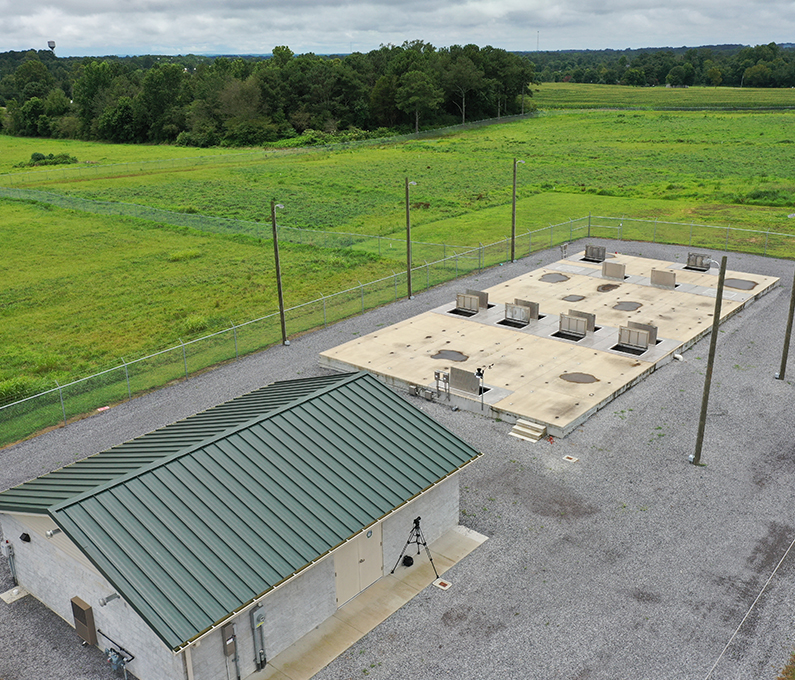
The ECOPOD units treat incoming wastewater with an expected strength of approximately 300 mg/L incoming BOD/ TSS loading, down to 30/30 effluent limit requirements. Each home is equipped with a Septic Tank Effluent Pump (STEP) system that moves the influent to the ECOPOD treatment system. The system has a flow equalization tank with duplex alternating pumps, four E1600 ECOPOD units installed in parallel, then a dosing chamber with duplex alternating pumps that provide controlled dosing to a drip dispersal field. Oxygen is pumped into the system allowing the bacteria to thrive and grow in much greater numbers than would occur naturally. This “overpopulation” of bacteria speeds the process of breaking down the sewage, making it safe for release into the environment. The entire ECOPOD intra-tank bioreactor treatment system is buried in a cast-in-place concrete tank.
As the town continues to expand, the system is designed to grow with it and the addition of extra trains in the future
will be easy and cost-effective. After the first three years
in operation, there have been no regulatory
issues and operators find the system
easy to maintain.