PRODUCTS USED
Laurel Regional Airport Authority had an undersized 20,000 GPD wastewater treatment system servicing the airport and local business park. Treated effluent discharges to a Pascagoula River Basin tributary.
When the Authority applied for an updated permit for an increased flow of 50,000 GPD, the State conducted a waste load allocation study and imposed more stringent permit parameters including increasing BOD from 30 mg/L to 14 mg/L, 6.0 mg/L dissolved oxygen level and 2.0 mg/L total ammonia levels, and nutrient monitoring.
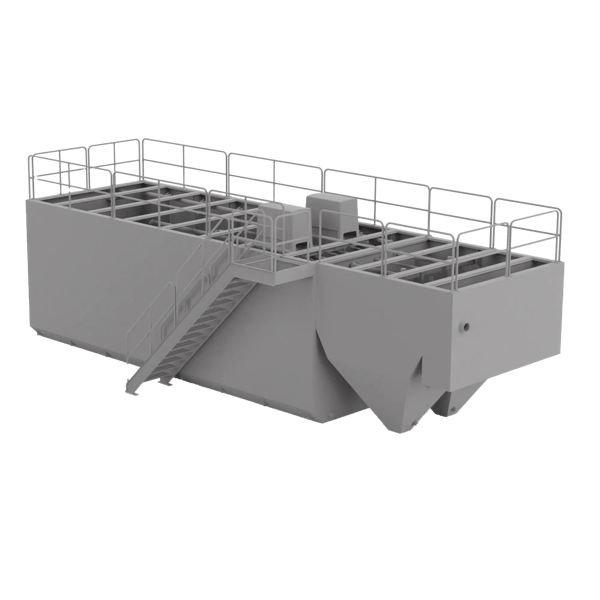
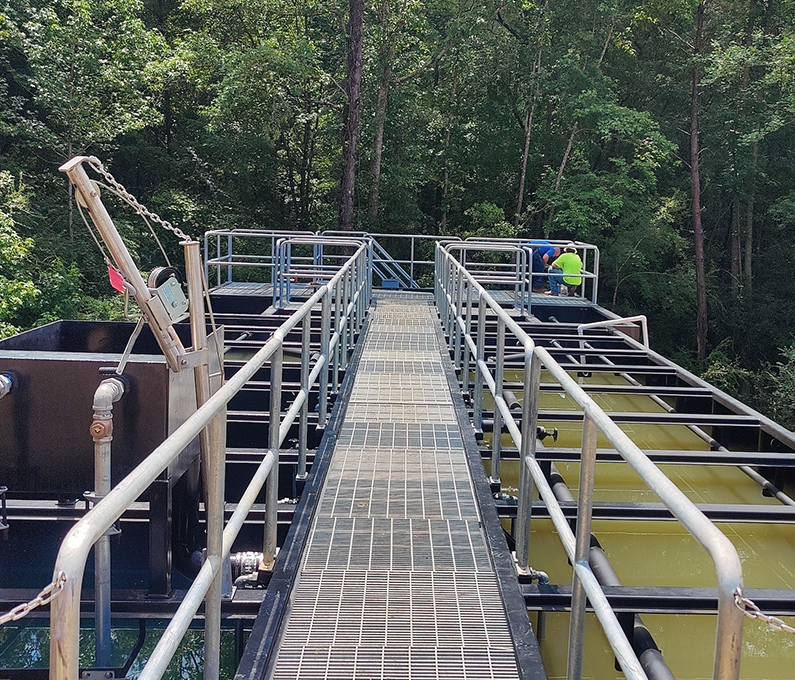
The selected extended aeration ENVIRO-AIRE Package Treatment Plant meets the 50,000 GPD requirement and new NPDES parameters and allows extensive operator control based on actual flows and loading. Extended aeration allows for efficient reduction of both BOD and ammonia. Effluent from the generating facilities gravity flows to a lift station that pumps it to the treatment plant.
Effluent then flows through a manual bar screen into a flow equalization tank equipped with duplex alternating pumps. The pump timer is controlled by the main control panel and can easily be adjusted by the system operator to accommodate fluctuating flows. The pumps move the water into a flow proportioning box with an adjustable weir, which allows the operator another avenue to adjust the operating level. Overflow dumps back into the flow equalization chamber, and standard flow moves forward into the aeration basin sized for 24 hours of retention time, where most of the treatment occurs. This adds oxygen and ensures sufficient mixing for microbiology and the contaminants.
After aeration, the water gravity flows into the hopper clarifier, where solids settle to the bottom of the cones and clarified water flows through to the tertiary sand filter. A scum skimmer and waste activated sludge/return activated sludge lines operate via airlift from the main aeration blowers and can be manually adjusted by the operator. An integral solids holding tank, also aerated, prevents foul odors. The return activated sludge line recirculates the mature microbiology back to the aeration basin for seeding and the clarified water moves to the sand filter system. The sand filter serves as a tertiary treatment solution ensuring the low-level limits are consistently met by the treatment plant. After the sand filter, the water flows through a disinfection chamber, then a tablet fed dechlorinator to remove any trace levels of residual chlorine.
Finally, the water moves into a post aeration chamber equipped with an independent aerator diffuser drop assembly ensuring the dissolved oxygen permit parameter is met. Once the water is sufficiently aerated, it exits the treatment unit and flows directly into the tributary via the systems discharge pipe.