PRODUCTS USED
The Lauloa Maalaea Resort in Hawaii was required to update their wastewater treatment unit due to tighter effluent requirements required in a forthcoming permit update. The existing treatment unit to be replaced was installed below grade in the resort’s parking lot. Due to limited space on the site, this was also the only possible location for a new system.
Infiltrator was faced with the challenge of manufacturing a treatment system that would maintain the footprint boundaries of the existing system, while providing treatment to comply with more stringent effluent quality requirements. Additionally, given the location and importance of esthetics in this highly traveled vacation area, the owners wanted the system tucked away and virtually unnoticeable by the residents of the resort.
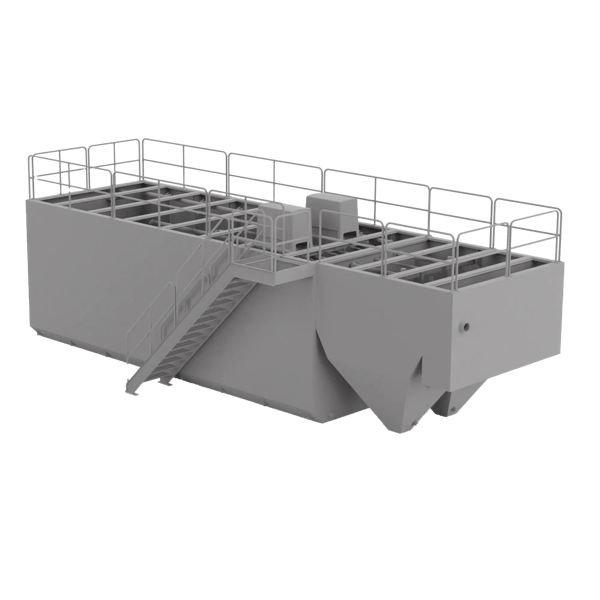
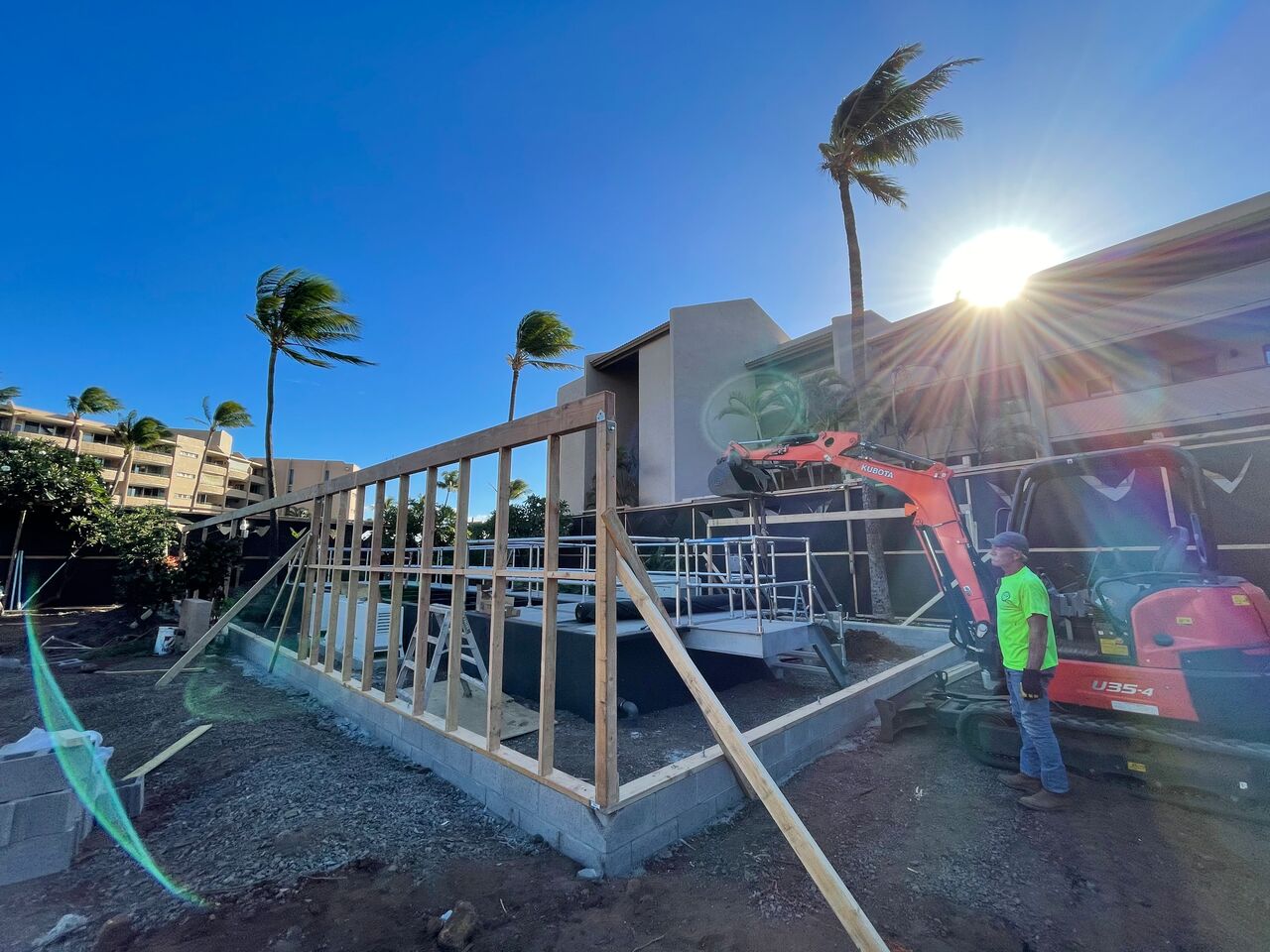
To meet the new regulation requirements and handle the design flow of 21,000 gallons per day (GPD), the Resort selected a new Infiltrator ENVIRO-AIRE Extended Aeration Treatment Unit. The old treatment unit was completely removed from the site, followed by the placement of a foundation on which the new treatment system was installed. To ensure the treatment unit was out of site, secure, and esthetically pleasing a building was constructed around the unit. The extended aeration process selected for this system utilizes aeration followed by clarification and disinfection.
The flow equalization chamber receives the incoming wastewater then duplex pumps discharge the wastewater into the aeration chamber. Duplex positive displacement blowers and an air distribution manifold system supply all the air needs to the system including air diffusers, airlift pumps, and a scum skimmer. The hopper-style clarifier chamber has baffling to prevent short circuiting and to provide the maximum uniform solids settling area. The settled sludge returns from the clarifier floor sludge well to the aeration chamber by the positive sludge return system. Immediately following the clarifier is a plug flow chlorine contact chamber. The influent characteristics were typical domestic waste loadings, with effluent requirements of less than 20 mg/L BOD and TSS.