Dry Well Drainage Systems and Kits
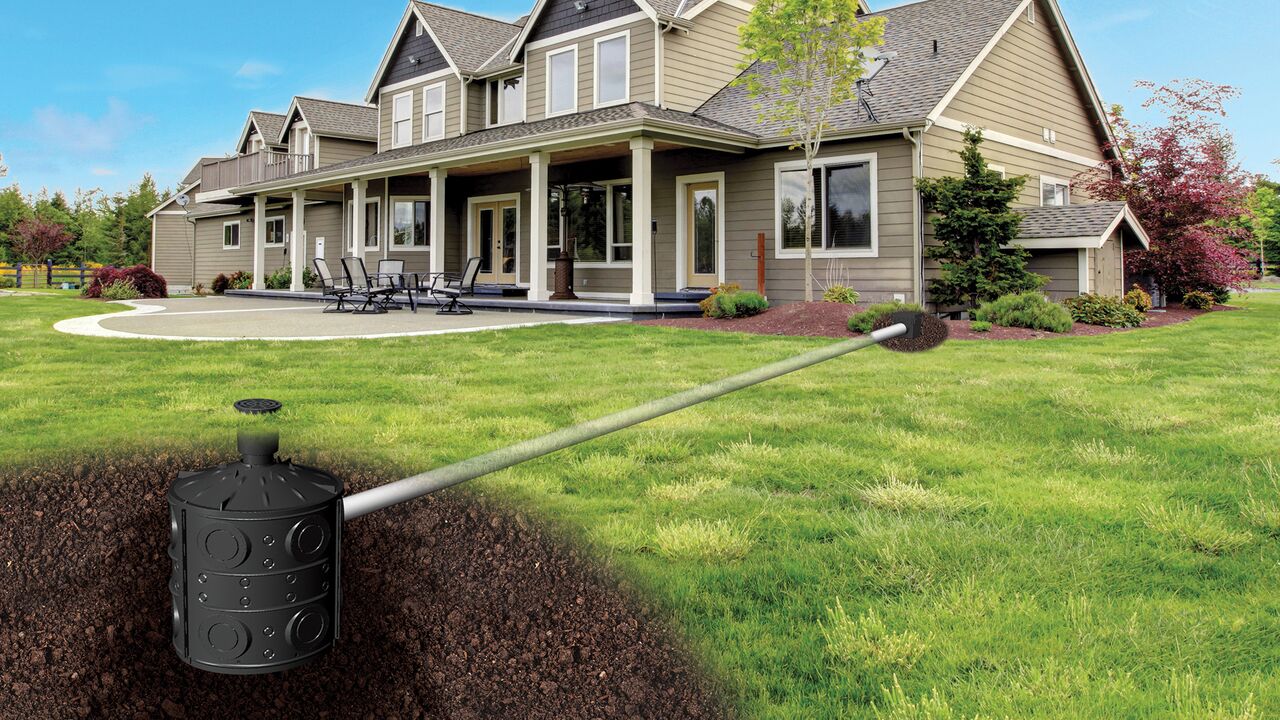
Collect, temporarily store, and slowly release water into the ground with a dry well system. Handles drainage problems such as standing water in yards.
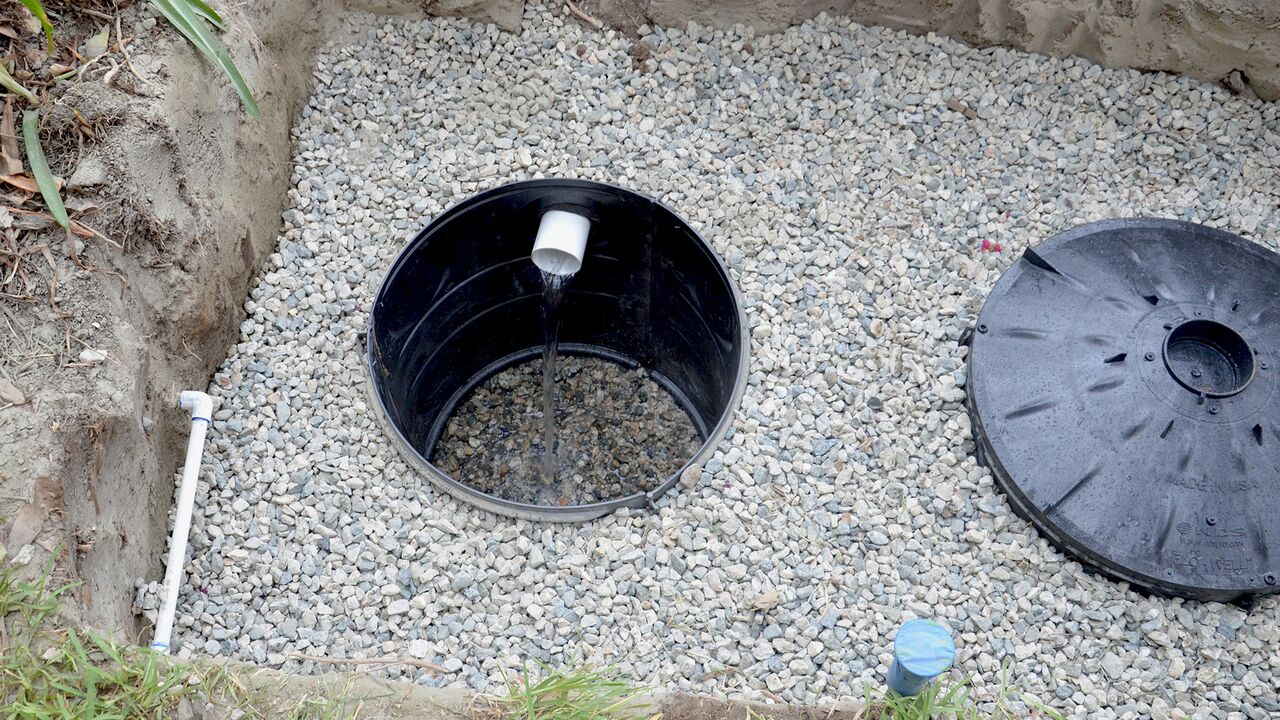
Dry Well Drainage Systems and Kits
A few things must be considered when connecting a washing machine to a Flo-Well dry well. First, the soap must be eco-friendly. Second, the storage volume of the system must be able to hold the volume of water from the washing machine multiplied by the number of loads of laundry. If the unit is also connected to any storm drainage system, this water must also be accounted for. It is also preferred that several Flo-Well dry wells be connected in series instead of stacking. The passage of water through a series of Flo-Well dry wells will allow more time for sediment to settle.
Yes. Multiple Flo-Well dry wells can be stacked or connected in series to increase storage capacity.
Filter fabric should be used to wrap around the Flo-Well dry well to prevent the drain rock from entering it. Filter fabric can also be used to keep the soil out of the drain rock.
A continuous piece of 4 in. SDR 35 pipe can be run from the Flo-Well bottom to the surface drain inlet. The surface drain inlet can be connected to the pipe using an NDS #3P12 PVC Increaser/Reducer Adapter and Welder contact adhesive by Homax Products, Inc. If the surface drain inlet is not being used, then a piece of 4 in. Schedule 40 pipe can be run from the Flo-Well bottom to the cover.
NDS #3P12 PVC Increaser/Reducer Adapter will need to be inserted into the Flo-Well cover with the 4 in. fitting end facing up. Insert a section of 4 in. SDR 35 to the fitting in the cover and connect a second #3P12 to the top of the pipe. The surface drain inlet will need to be glued to the #3P12 with Welder contact adhesive by Homax Products, Inc.
An on-line calculator can be found at www.ndspro.com/flo-well-calculator. This calculator will determine the number of Flo-Well dry wells needed for the project. This is determined by the drainage area, the surface material of the drainage area, material used to backfill around the Flo-Well dry well, dimensions of the backfill, and type of material beneath the Flo-Well dry well.
It is recommended that you wrap the Flo-Well dry well with filter fabric to prevent the backfill material from entering the unit. When the fabric is used, then all the 1 in. drain holes should be removed.
There should be a minimum 6 in. of between Flo-Wells to facilitate gravel fill and provide proper support for the structure.
The amount of drain rock that is required depends on the size and depth of the hole that is dug. A 4 ft. diameter hole that is 4 ft. deep will require a little less than 1.5 cubic yards of drain rock. There will be approximately 11-1/4 in. of rock below the Flo-Well chamber, 1 ft. of rock surrounding it, and 8 in. of soil above it. This installation will hold approximately 165.5 gallons of water. A 3.5 ft. deep x 4 ft. diameter hole will require a little more than 1 yard of drain rock. This installation will have 6 in. of rock below, 1 ft. around, and 8 in. of soil above the Flo-Well dry well. This will hold approximately 135.5 gallons of water.
Each Flo-Well dry well can hold approximately 50 gallons of water.
If the volume of storage provided in the Flo-Well dry well (s) plus surrounding drain rock is greater than the anticipated runoff in the 100-year storm event, then no, an overflow may not be necessary. However, it is not a bad idea to install an overflow to give the runoff a place to go if the system becomes overloaded. The overflow must be installed at an elevation lower than lowest point where the runoff enters the drainage system.
A Flo-Well bottom is only necessary when installing the unit in light vehicular traffic or when stacking multiple Flo-Well dry wells.
The minimum depth that a Flo-Well dry well should be buried is 8 in. from the surface to the top of the unit. When buried to this depth, it is rated to support light vehicular traffic (loads up to 175 psi). The Flo-Well dry well can be buried to depths up to 8 ft. deep. It will support heavier loads at this depth, but the type of soil above the unit will determine the maximum load that can be supported.
It is not recommended to stack more than 4 Flo-Well dry wells on top of each other. The Flo-Well bottom will need to be inserted into the bottom chamber when stacking multiple units. It is also recommended that a center pipe be connected to the cover and bottom to act as a center support column helping to stabilize the system.
¾ in. to 1 in. drain rock should be used to backfill around the Flo-Well dry well. If the unit will not have to support vehicular traffic loading, then drain rock or any of the NDS EZflow pipes can be used to wrap around the Flo-Well dry well. The drain rock and the EZflow have up to 40% void space that can be used for additional water storage space for runoff.
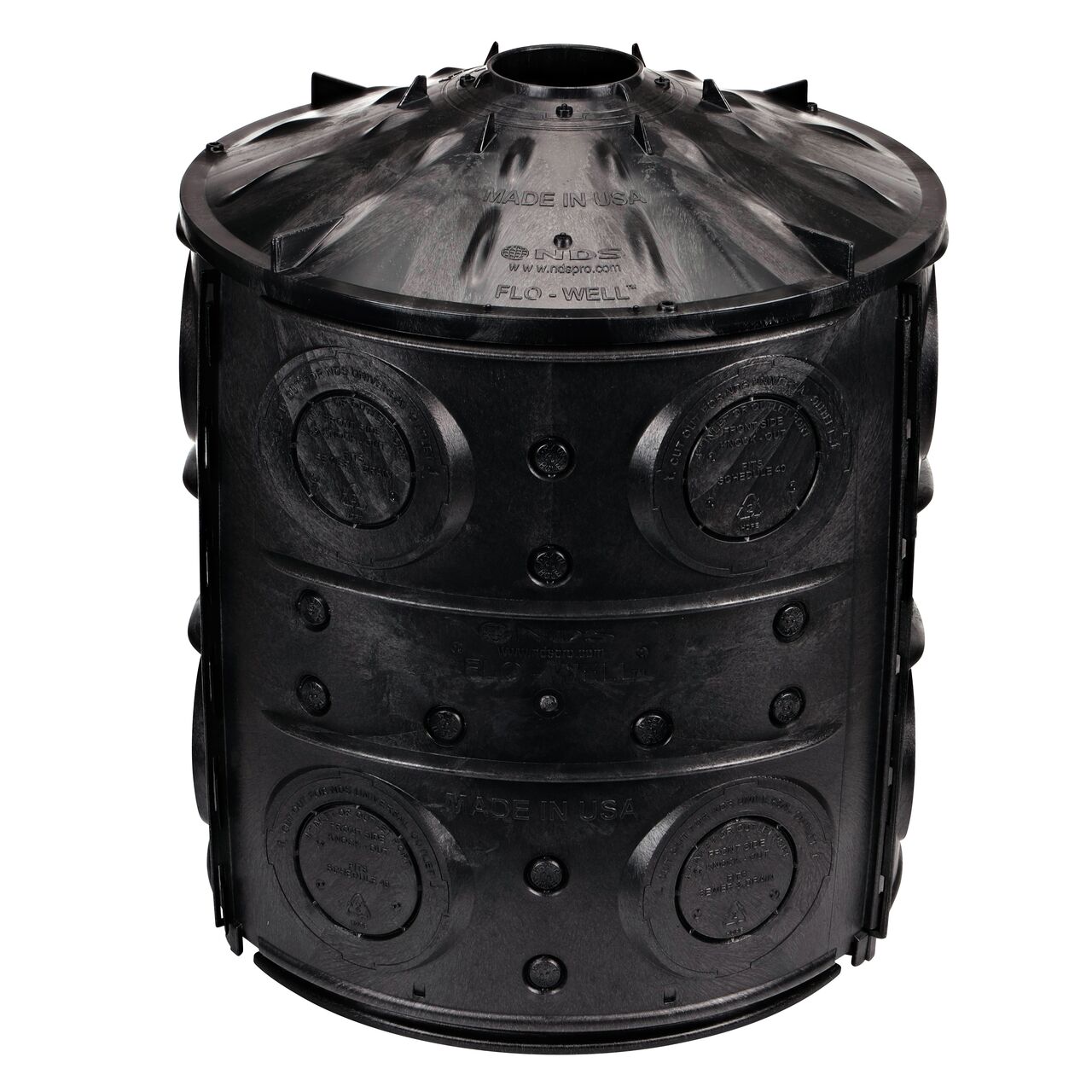
All Flo-Well dry well boxes come with the interlocking side panels and the Flo-Well cover. If purchased at Lowe’s, the box also includes fabric wrap to prevent sand and other debris from entering the Flo-Well dry well reservoir.