
What Are Drip Irrigation Emitters?
Discover how drip emitters can help you water wisely, keep plants thriving, and make every drop count.
Introduction: Why emitters matter
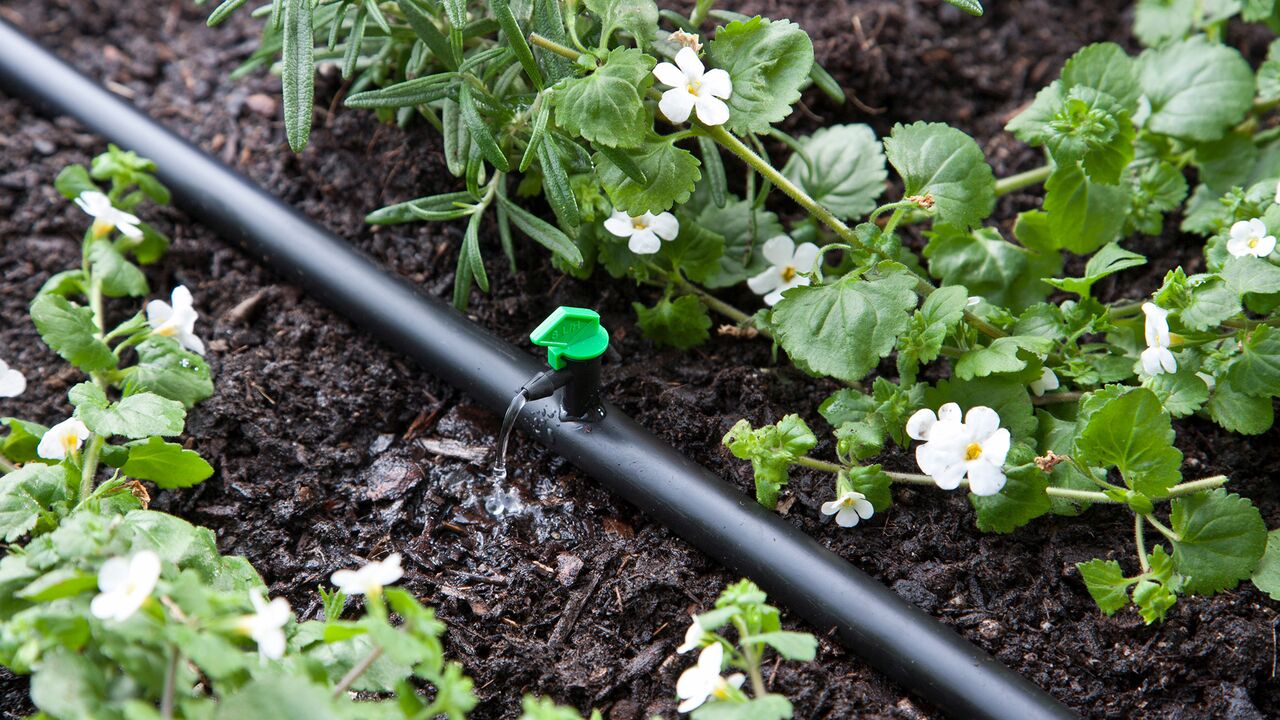
Small devices that deliver water to your plants, drip irrigation emitters are the heart of an irrigation system. These essential components regulate how much water exits the line, usually between 0.5 and 4 gallons per hour (GPH), and they determine how efficiently your garden gets watered.
Unlike sprinklers that spray water broadly and lose much of it to evaporation or wind, emitters deliver water slowly and directly at the soil level, right where roots need it. That precision means healthier plants, fewer weeds, and less wasted water—which can result in lower water bills.
This guide will cover:
- How emitters work in a drip irrigation system.
- Benefits of using emitters over other watering methods.
- The different types of emitters and their best applications.
- How to match emitter flow rates to plants and soil.
- Durability factors and material considerations.
- Real-world examples of how to choose the right emitter.
By the end, you’ll know how to choose emitters that help save water, reduce maintenance, and keep your plants thriving.
How emitters fit into your drip system
Core chain of components:
- Water source
- Backflow preventer
- Filter
- Pressure regulator
- Mainline tubing
- Distribution tubing
- Emitters
In drip irrigation, emitters are the final step in the system, the outlets that deliver water to the soil and your plants.
How they work:
Water flows through the drip tubing to reach the emitter. The emitter is specially constructed to deliver a precise amount of water.
- Orifices: Precisely sized openings that help regulate water output.
- Labyrinth pathways: Force water through a maze of tiny grooves to slow the flow and reduce pressure before release.
- Flexible diaphragms (in pressure-compensating emitters): Expand and contract as pressure changes to help maintain a consistent flow rate.
Why they matter:
- Deliver water precisely to the root zone where plants need it most.
- Available in a range of flow rates to accommodate different soil types, site conditions, and plant types.
- Reduce runoff, overspray, and deep percolation losses.
Many modern emitters are self-flushing, so they can clear out small particles at startup to reduce clogs.
Benefits of drip irrigation emitters
Emitters do more than deliver water. They transform how plants grow and how homeowners manage landscapes.
1. Water efficiency and conservation
- Drip emitters can reach 90–95% efficiency, compared to 60–70% for sprinklers.
- Savings of 30–50% on outdoor water use are common.
- Particularly valuable in drought-prone areas or where water costs are high.
2. Healthier plants
- Consistent root-zone moisture promotes stronger roots.
- Reduces stress caused by wet-dry cycles.
- Minimizes risk of fungal diseases associated with oversaturated foliage.
3. Fewer weeds
- Only irrigated spots are watered, not the empty spaces.
- Drier soil between plants keeps weeds from germinating.
4. Reduced disease pressure
- Overhead watering creates leaf moisture, which can foster fungus and bacteria.
- Emitters deliver water at the soil line, keeping leaves dry.
5. Cost and labor savings
- Lower water bills offset the initial system cost in a few seasons.
- Less hand watering means less time spent managing hoses.
- Consistent watering contributes to fewer plant losses and lower pesticide needs.
Easy win: Hide drip tubing under mulch. It protects emitters, conserves moisture, and keeps the system looking clean.

Do You Have Standing Water Problems?
Our experts can answer your technical questions, help you design the right drainage system, and even provide step-by-step instructions.
Types of drip irrigation emitters
Different
emitter types suit different plants, soils, and site conditions.
Single outlet emitters
- How they work: one outlet delivers water to a single plant or point of application.
- Pros: precise watering, simple to manage.
- Cons: one emitter is needed per plant which can increase installation time in larger landscapes.
- Best for: individual plants, containers, and sparse plantings.
- Products: NDS single outlet drip emitters
Multi-outlet emitters
- How they work: a single emitter body distributes water through multiple outlets.
- Pros: waters multiple plants from one emission point, which can reduce installation time.
- Cons: less flexible if plants have different water requirements.
- Best for: container groupings and areas with several plants clustered together.
- Products: NDS
multi-outlet emitters
Non-pressure-compensating (NPC) emitters
- How they work: fixed orifice; flow rate changes with supply pressure.
- Pros: low cost, simple, and reliable.
- Cons: inconsistent on slopes or long runs.
- Best for: flat gardens, containers, and small raised beds.
- Product: NDS
Take-a-Part™ Flag Emitters
Pressure-compensating (PC) emitters
- How they work: flexible diaphragm adjusts to maintain rated flow.
- Pros: uniform output across elevation changes and long lateral runs.
- Cons: higher upfront cost.
- Best for: sloped yards, long tubing runs, and orchards.
- Product: NDS
AccuFlow™ PC Emitters
Adjustable emitters
- How they work: turn the top to increase or decrease flow.
- Pros: one zone can serve mixed water needs.
- Cons: requires monitoring and seasonal adjustment.
- Best for: mixed planting beds, transitional gardens, or new landscapes.
- Product: Dial-a-Flo™
Adjustable Bubblers
Micro-sprays and bubblers
- How they work: Micro-sprayers deliver water in a spray pattern with a radius of 2–12 ft. Bubblers deliver water as a small stream spray with a radius of 0–48 in.
- Pros: cover broader zones with fewer outlets.
- Cons: higher evaporation than point emitters.
- Best for: shrubs, groundcover, flower clusters, patio pots.
- Products: Hydro-Flo™
Jets, Hydro-Port™
Adjustable Flow Bubblers
In-line vs end-of-line emitters
- In-line: built into tubing at fixed intervals, generally 12–24 in. apart. Best for rows of vegetables, densely planted areas, hedges, or vineyards.
- End-of-line: attached at the end of a small
distribution tube to serve one plant. Best for containers, trees, or
landscapes with irregular spacing between plants.
Pre-installed emitter drip irrigation pipe
Also known as emitterline, dripperline, or dripline, this is tubing with drip irrigation emitters factory-molded inside at consistent intervals. Unlike traditional systems where you manually punch a hole and insert each emitter, dripline offers a streamlined, all-in-one solution. This significantly speeds up installation and ensures uniformity, eliminating guesswork and potential leak points from manual connections. NDS dripline is available with pressure-compensating and non-pressure-compensating emitters.
Ideal applications: Emitterline is the go-to choice for watering plants in straight, dense rows. It helps in applications like:
- Vegetable gardens and crop rows
- Hedges and shrub lines
- Dense groundcover plantings
- Greenhouses and vineyards
While incredibly efficient, its main limitation is flexibility. It's less suitable for gardens with widely or irregularly spaced plants. Repairing a damaged section also requires cutting out the piece and splicing in a new one with couplers, rather than just replacing a single emitter.
Tip for selection: Dripline comes in various tubing sizes (16mm, 17mm, 18mm, and more), flow rates, and emitter spacings. Select the option that best fits your plant type, planting density, soil conditions, and coverage requirements. The NDS Dripline Calculator can help you determine the amount of dripline needed for your project.
Emitters are rated in GPH (gallons per hour). Matching flow rate to plant type and soil is key.
Common ratings
- 0.5 GPH: herbs, succulents, sandy soils needing short cycles.
- 1 GPH: most vegetables, flowers, and perennials.
- 2 GPH: shrubs, roses, and larger perennials.
- 4 GPH: trees, large shrubs, and sandy soils — with multiple emitters often needed per plant.
Quick reference table
Plant type | Suggested flow rate | Notes |
Succulents, herbs | 0.5 GPH | One emitter; prevents overwatering |
Vegetables, flowers | 1 GPH | Standard for garden rows and beds |
Roses, perennials | 2 GPH | Larger roots; higher demand |
Fruit trees, large shrubs | 2–4 GPH | Multiple emitters around drip tubing |
Containers, baskets | 0.5–1 GPH | Adjustable rate emitters are ideal |
Soil considerations
- Sandy: drains quickly → use low flow, frequent cycles.
- Loam: flexible → 1–2 GPH works in most cases.
- Clay: slow absorption → low flow, longer cycles.
Pro tip: Use several low-flow emitters around trees and shrubs instead of one higher flow point. This distributes water evenly and encourages balanced root growth.
How do you size drip emitters?
Properly sizing your drip irrigation emitters ensures plants get the right amount of water without waste. The goal is to match the water application rate to your plant's needs and the soil's absorption capacity. Here’s a simplified process:
- Identify plant and soil type: Start by using the tables above. A small vegetable in clay soil has very different needs than a large shrub in sandy soil.
- Determine the number of emitters: For small plants, one emitter is sufficient. For larger plants like shrubs and trees, use multiple emitters spaced around the plant's drip line (the area under the outermost leaves) to water more of the root zone. A good rule is 2–4 emitters for a medium shrub and 4–6 for a small tree.
- Calculate run time: Use this formula: Run Time (in hours) = Amount of Water Needed (in gallons) / Total Flow Rate (in GPH).
Example:
- Total flow rate: 2 emitters x 2 GPH/emitter = 4 GPH.
- Calculate run time: 5 gallons / 4 GPH = 1.25 hours, or 75 minutes.
- You would set your timer to run that zone for 75 minutes once a week. After the first watering, check the soil moisture to ensure water has penetrated 6–8 in. deep and adjust the time as needed.
How many emitters can I put on supply tubing?
The number of emitters you can run on a single supply line is limited by the total flow capacity of your tubing. Exceeding this limit can cause a reduction in water pressure throughout the system, resulting in uneven watering from the emitters farthest from the water source. Pressure-compensating emitters can help maintain uniform flow rates as pressure varies, but they don’t affect the tubing’s maximum flow capacity. Here's how to figure out your limit:
- Know your tubing's capacity: Different sizes of tubing can handle different flow rates. A general rule of thumb is:
• 1/2 in. tubing: up to 200 gallons per hour (GPH) total flow.
• 3/4 in. tubing: up to 480 gallons per hour (GPH) total flow. - Add up your emitter flow rates: Create a total sum of the GPH rating of each emitter you plan to install on the line.
- Compare totals: Your total emitter flow rate must be less than your tubing's capacity.
Calculation: 200 GPH (capacity) / 1 GPH (per emitter) = 200 emitters maximum.
Troubleshooting tip: If emitters at the end of a long run are barely dripping, you may have exceeded the tubing's capacity or the run length. In general, 1/2 in. tubing runs should be under 200 ft. The solution is to split the area into two separate zones, each with its own valve, to stay within the limits. Using pressure-compensating emitters can help, but they can’t correct a system that’s fundamentally overloaded.
- UV resistance: high-grade materials treated with UV inhibitors resist sun damage and cracking.
- Anti-clogging design: self-flush features and turbulent pathways reduce blockages.
- Anti-siphon: prevents debris from being drawn in when the system shuts off.
- Chemical resistance: withstands chlorinated municipal water or mineral-heavy well water.
- Manufacturing quality: precision molding ensures consistent flow.
What do the colors of drip emitters mean?
- Black Take-a-Part Flag Emitter: 1.0 GPH flow rate. Suitable for most vegetables, flowers, and perennials in average loamy soils.
- Green Take-a-Part Flag Emitter: 2.0 GPH flow rate. Ideal for larger plants with more extensive root systems, such as established shrubs and roses, or in sandy soils that drain very quickly.
- Blue Take-a-Part Flag Emitter: 4.0 GPH flow rate. Ideal for trees and large shrubs to provide even root-zone coverage.
Selecting the right emitter: examples
1. Raised vegetable bed
- Use 1 GPH emitters spaced every 12 in.
- Provides even moisture for densely planted crops.
2. Orchard with sloped terrain
- Multiple 2 GPH pressure-compensating emitters around each tree.
- Uniform water delivery despite elevation changes.
3. Container garden on patio
- Adjustable 0.5–1 GPH emitters for flexibility.
- Prevents overwatering in small soil volumes.
4. Mixed landscape bed
- Combination of adjustable emitters and micro-sprays.
- Serves both drought-tolerant shrubs and thirstier annuals in one zone.
Helpful products to explore:
- Single Outlet Emitters — for delivering water to individual plants.
- Multi-Outlet Emitters — for serving multiple plants from one point.
- AccuFlow PC Emitters — for consistent performance on slopes.
Video resources: See how to install the NDS AccuFlow Pressure Compensating Emitter with this short video.
FAQs about drip irrigation emitters
What is the purpose of a drip emitter?
To deliver small, steady amounts of water directly into the soil at the plant’s root zone.
How do pressure-compensating emitters work? A flexible diaphragm inside the emitter expands or contracts as pressure changes to help maintain a steady output.
Can I mix emitter types in one zone?
It’s possible but not recommended. Group similar emitters in one zone for consistent results.
How do I choose the right flow rate? Base it on plant size, soil type, and climate. Use 0.5 GPH for small plants, 1–2 GPH for most beds, and 2–4 GPH for trees.
How long do emitters last?
Quality models can last 10–15 years with proper filtration and seasonal checks.
Do emitters work with timers? Yes. Pairing emitters with a timer or smart controller as part of your drip system lets you automate watering schedules and improves efficiency.
Can emitters clog?
Yes, but filters, self-flush designs, and regular system checks can help reduce the chance of clogs.
Conclusion: Smarter watering with the right emitters
Emitters may be small, but they’re a key part of a drip irrigation system. Choosing the right type and flow rate can help give you:
- Healthier plants with deeper roots.
- Fewer weeds and less disease.
- Lower water bills and better efficiency.
For flat beds and simple setups, single-outlet emitters or in-line emitter tubing (dripline) may suffice. For slopes or long runs, pressure-compensating emitters help keep water delivery uniform. For mixed landscape beds or containers, adjustable and multi-outlet emitters offer added flexibility.
Next steps:
- Consider Single-Outlet Emitters such as drippers, bubblers, and micro sprays.
- Explore AccuFlow PC Emitters for reliability on slopes.
- Try Multi-Outlet Emitters for serving multiple plants at once.
Water wisely, keep plants thriving, and make every drop count. For more articles and resources or details about specific drip emitters, visit the NDS website.
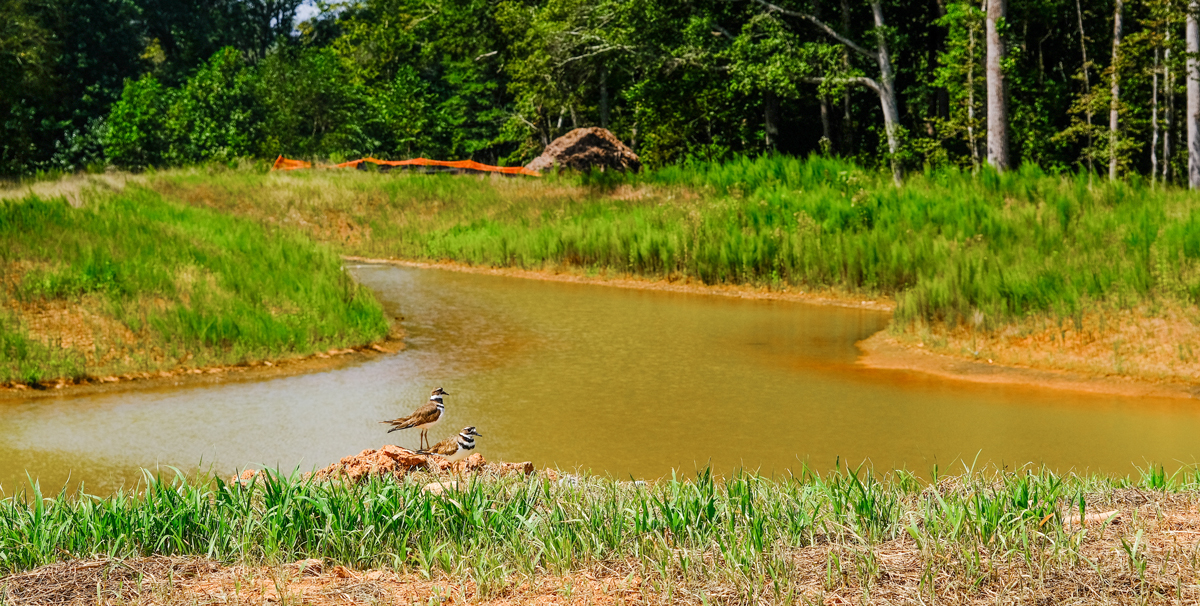
Explore the essential differences between retention ponds and detention ponds. Learn how each basin manages stormwater, impacting environmental and urban planning.
Read More
No more muddy paws, drenched flower beds, or splash guards that kinda work - we've got three easy drainage fixes that won't break the bank.
Read More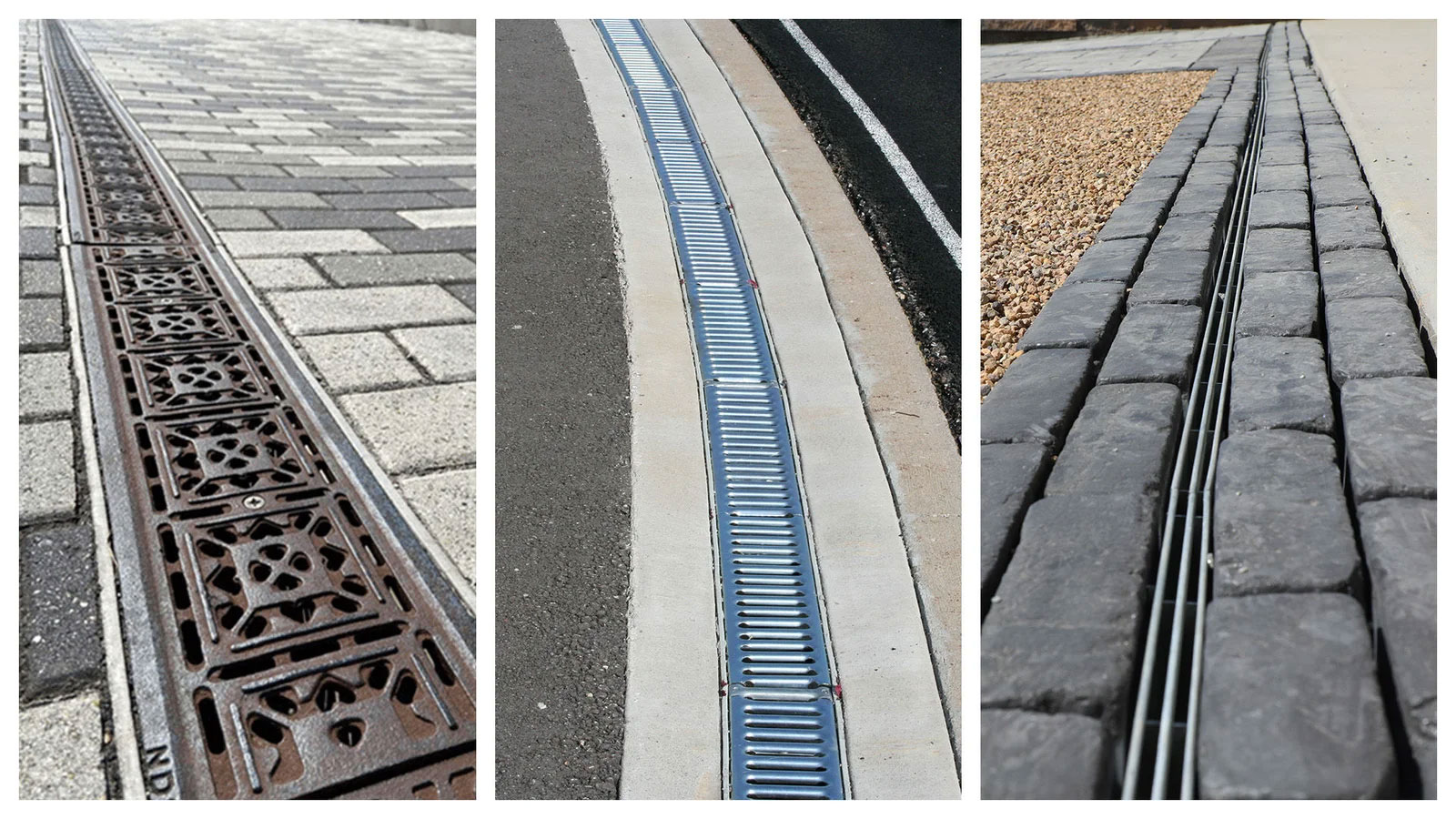
This guide covers the purpose and benefits of channel drains and how to install a trench or channel drain step by step.
Read More
Learn how to install a dry well with our guide and practical tips for managing yard drainage effectively.
Read MoreHave Questions? Need Help? Want to Know More?

Have Questions? Need Help? Want to Know More?
No questions are too big or small. Find out how NDS solutions experts can help you solve your water management problems. Call 800-726-1994 or contact us by clicking below.
Contact Us