
PRODUCTS USED
With a total roof surface area of 11,000 square feet available from the home and garage structures, Mike Stroud and Rain Pro of High Point, NC determined that a one-inch rain event would yield 6,860 gallons; ample water supply for the homeowners needs.
A whole house potable water system collects rainwater from the roof via leaders and piping and directs it to a series of storage tanks. The water is piped from the buildings in Schedule 40 PVC piping and then through a filter that will allow nothing larger than 350 microns to enter the tanks. Because the first flush typically includes higher levels of contaminants, prior to entering the tanks the first 120 gallons of water is diverted away from the tanks, into a pipe, which discharges to a separate location. Once the pipe is filled, a valve closes and the remaining flow from the rain event enters the storage tanks. The first flush outlet is designed to slowly drain itself before the next rainfall.
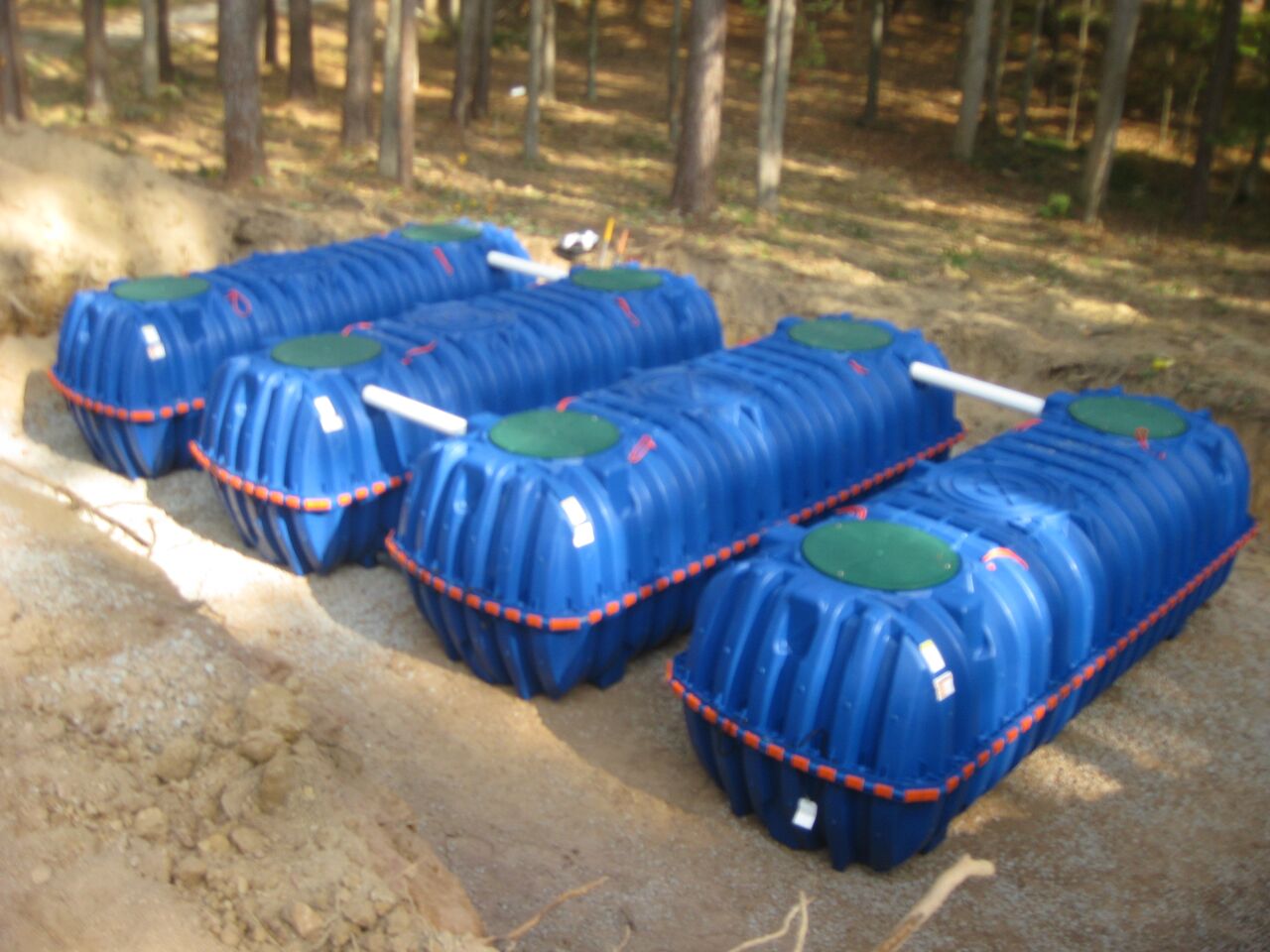
The system is designed with four Infiltrator IM-1760C 1787-gallon potable water tanks installed in series and connected at the bottom to function as one large tank and to yield a total storage volume of over 7,000 gallons. The Infiltrator tanks are NSF/ANSI Standard 61 (NSF 61) certified for potable water storage meeting a rigorous set of national standards to ensure potable water storage safety.
The tanks are buried outside the home and a submersible pump in the last tank in the series supplies water into the home. Prior to consumption, the water is pumped out of the tank and is treated via a set of three filters in an assembly; the first is a 20 micron filter, then a 5 micron filter, and finally with a 1 micron carbon filter. Following the filtration process, the water is disinfected via ultraviolet light. At this point the water quality exceeds all applicable Wake County and North Carolina potable water standards and is ready for home use.
The system is designed for easy maintenance. The prefilter has a self-cleaning feature that minimizes required maintenance; any maintenance that is required is fairly simple because the filter assembly easily removed. The cartridge filters enable easy filter changes with shut off valves on both sides of the filter assembly. The UV filter is also designed for easy maintenance; the bulb can be changed without having to disconnect any water lines. The UV bulb will be changed annually and the filters will need cleaning or replacement every four to eight months.