PRODUCTS USED
Camp Hirondelle is a seasonal hunting and fishing camp situated in the heart of the Laurentides Wildlife Reserve in Quebec, Canada. Because of the remote location, it has no public services including electricity and public water supplies. The camp includes three cottages, a camp manager’s residence, and a few structures that serve as temporary shelters. Wastewater from the lodging facilities was treated using a single septic tank and traditional absorption bed. Upon investigation, the absorption bed was found to be hydraulically overloaded causing effluent to emerge on the surface and flow in the direction of the lake. The 15-year-old absorption bed was also severely impacted by a thick biomat formation and needed to be repaired or replaced for the camp to continue operating.
A challenge for the replacement system designers was to keep the camp in continual operation during the installation phase. In addition, clean stone was not available in the immediate area for a conventional absorption bed and the remote location of the camp made the cost of transporting stone unreasonable. Engineers also had to consider options that did not require electricity since natural gas is the only source of energy on site. This eliminated the option to use dosing stations.
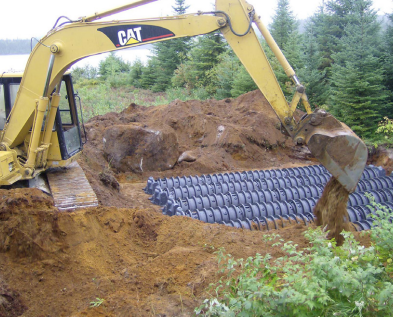
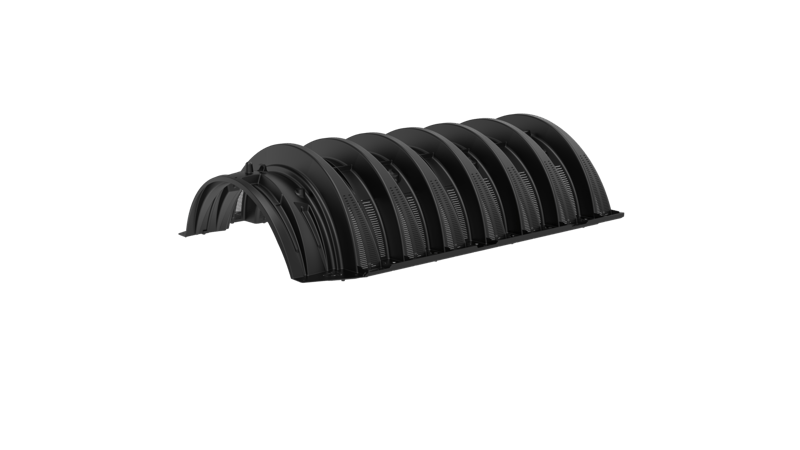
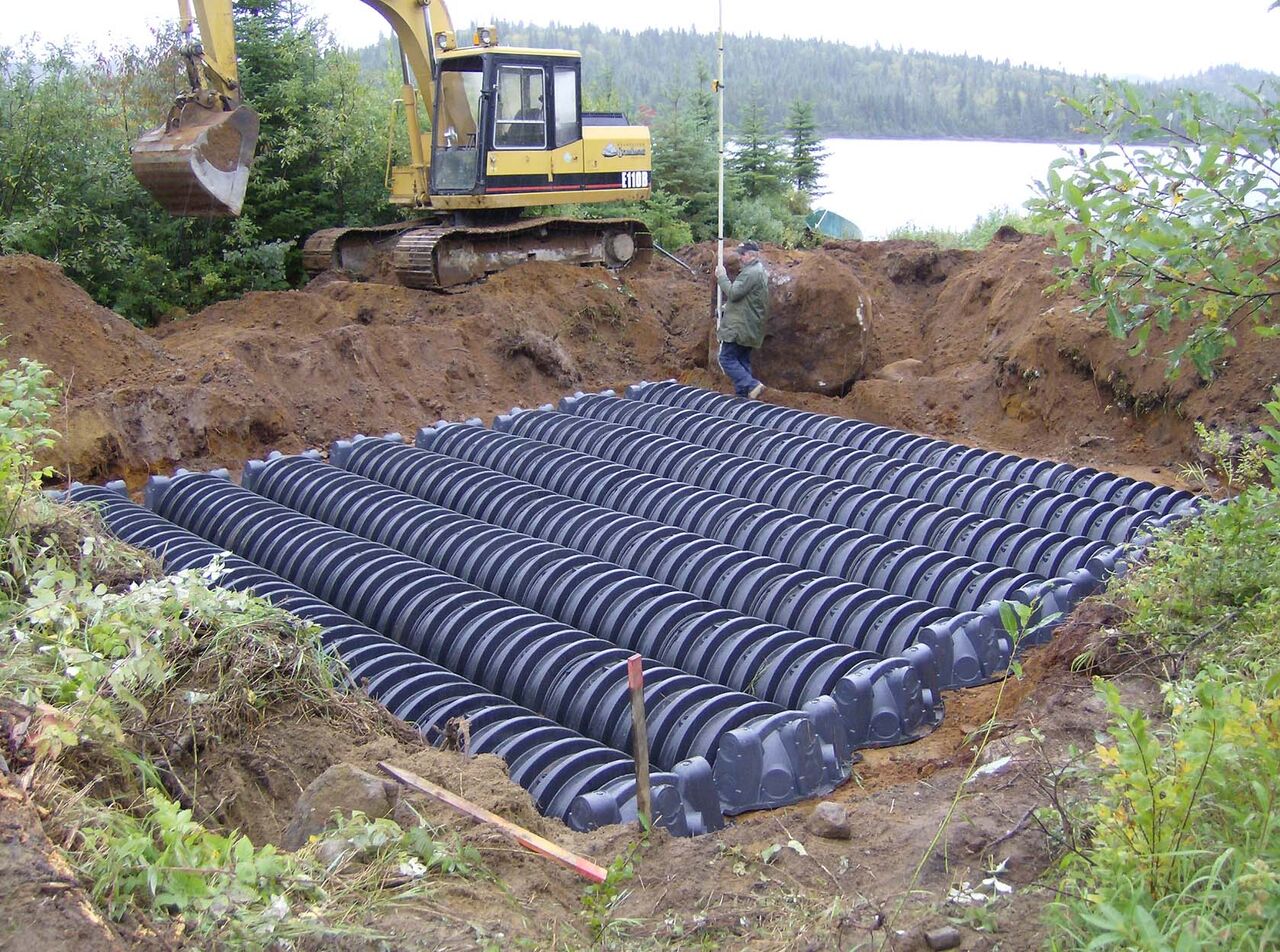
Engineers designed three individual septic systems. Infiltration beds using Infiltrator Quick4 Standard Chambers, which provided superior effluent infiltration though the absorption beds without dosing stations, were used. The chambers allowed for the rapid progression of the excavation and installation process eliminating facility downtime. Two of the systems include a 430 square foot infiltration bed. The third and larger septic system has a 861 square foot infiltration field. All three cottages are serviced by their own septic tank, one of which is connected to a distribution box equipped with flow dividers that evenly distribute effluent into the larger bed. The wastewater flows by gravity from the cottages to the septic tanks and then to the infiltration beds. The septic tanks have an effective working capacity of 2.8 cu. meters (742 IG) and 3.8 cu. meters (1,007 IG) per day.